European RamblingsHeavyTorque 41Pages 122–123
A WONDERFUL LIFE?
The life of an international heavy haulage driver isn't always easy. And maybe that's why there's such a pressing recruitment problem
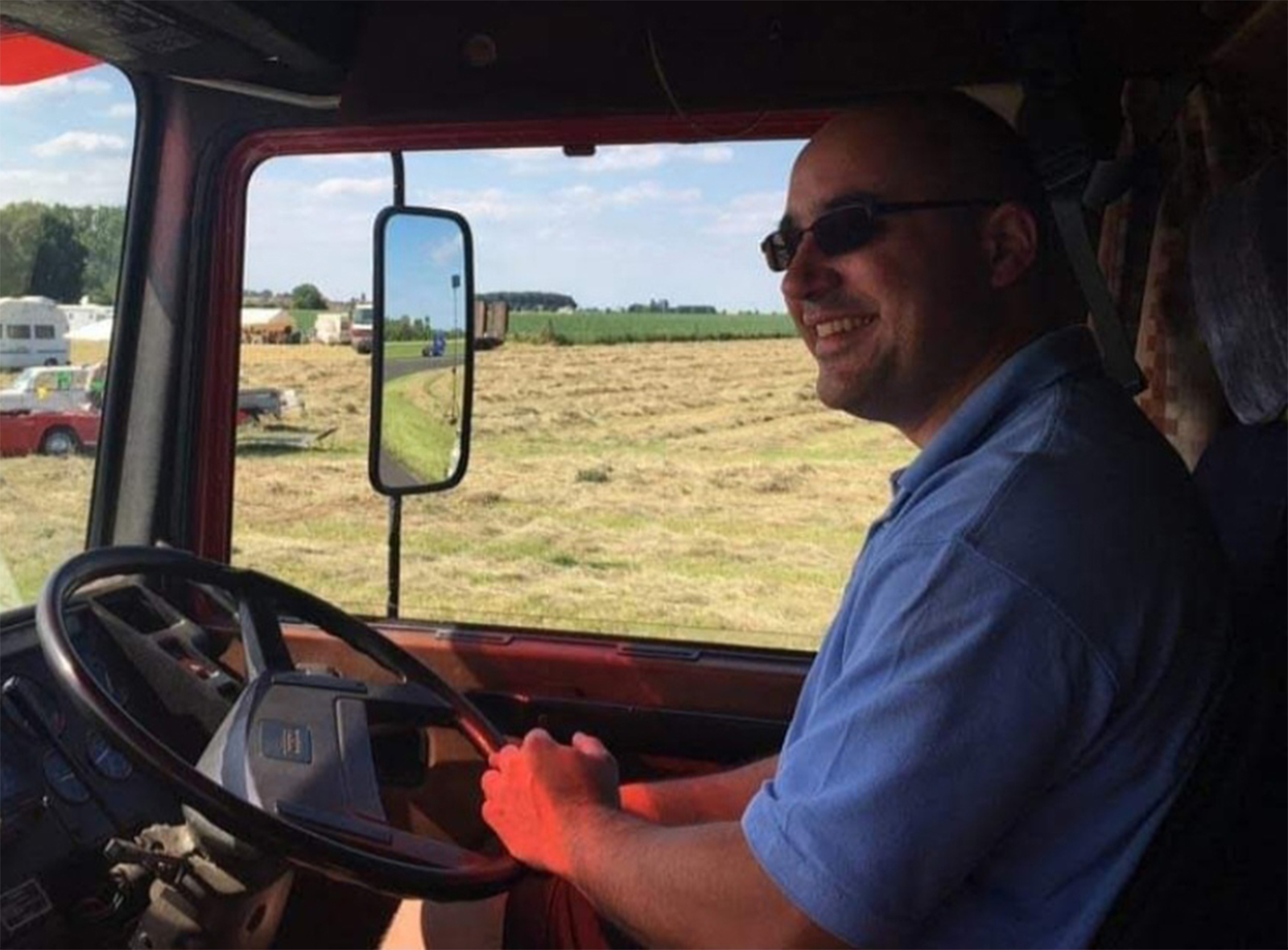
Words Dutch driver Patrick Versteeg
HeavyTorque 41Pages 122–123
Life on the road as a heavy haulage driver can be difficult. It's not easy having to drive all over Europe, deal with the different permits and driving bans, speak at least a few words in several different languages, and negotiate all the different road systems.
And then there are driving standards: before the pandemic, these weren't brilliant, but since then, it seems that a lot of people have actually forgotten how to behave on the roads. I'm not sure if there has actually been a rise in the number of accidents since Covid, but it certainly wouldn't surprise me.
I'm not just talking about car and van drivers here, either. Even so-called professional truck drivers can be bad. I'm talking about the ones that try to overtake you when they're only going 1kph more than you are, and those that try and squeeze their lorry into the gap between you and the truck in front of you, as well as drivers that think overtaking bans don't apply to them – the list is endless. All you can do is let out a sigh and crack on again.
On top of all that, you've got to deal with the falling standards at many truckstops. Not long ago, for example, I was on my way from Italy to Kiel in northern Germany on a special types route, when I pulled one Friday night into a truckstop at Hermsdorf, which I've previously found to be one of the better service areas. But when I'd parked up and gone inside to pay for my parking, I was told the restaurant there was no longer open on Fridays and weekends. Turned out they'd had trouble finding staff and so decided to keep it closed on days that weren't usually very busy. So I had to dine off a Bockwurst with potato salad from the shop there instead.
The next day, I'd planned to stop at a Hoyer truckstop on the A1, where I was going to spend the rest of the weekend. I'd not been to it before, but other Hoyer truckstops I've visited have all been spot-on, with good food, clean facilities and friendly staff. But when I got there, the parking area was completely full. So I ended up driving on a bit further to another truckstop at Sittensen, where the parking area is immense and the shop is always open.
I parked up there, finished my paperwork and went in to the restaurant. But as I approached it, I saw that the lights in the dining area were switched off. Sure enough, the lady behind the counter informed me that the restaurant there was closed due to staff problems. Dinner that night was a just a couple of meat rolls from their shop.
As I sat and chewed on those, I began to wonder who was responsible for the truckstops in Germany, and after a quick search online, I found it was an organisation called VEDA. So I wrote a long email to the chairman of VEDA, Armin Simmelbauer, explaining what had happened. I wasn't expecting any feedback, but to my surprise Simmelbauer replied, telling me he was going to look into it and that he would talk to the managers involved. Whether this does any good, of course, remains to be seen.
I know a lot of people look down on truck drivers, but the truckstops used to provide at least one place where you were treated like and old friend. If they stop doing that, we might as well pack it all in.
And talking of packing it all in, it seems to me that this is all just part of a much wider problem: the falling number of truck drivers in this sector.
According to the International Road Transport Union's survey in 2023, three million truck driving jobs were unfilled in 36 countries that year. And that number was expected to double by 2028.
The age of the average truck driver in Europe is 47, and a third of drivers are older than 55. Less than 5% of them are under 25, meanwhile. Quite clearly, there's going to be a massive shortage in a decade.
So what's going on? Is it the stress of being on the road all the time? Is it the falling standards at truckstops? Is it the unsocial hours? Or is it just that the pay isn't high enough?
Maybe it's a mixture of all of these. But whatever the cause, the big question is: how to attract the younger generation into the heavy haulage sector?
People often say this job is in your blood. I'm not sure if that's true, but a certain interest in it would obviously help, whether in the work that this sector carries out or just a general interest in machinery. After all, it's not just about driving wider or longer loads; in most cases, you have to be able to load them and secure them properly, too, and there isn't always any help.
Would a proper training scheme help? Of course. But most firms in the heavy haulage sector already put new drivers through a training course to get them used to operating plant, which is obviously a good start, even if a lot more remains to be learned out on the road.
And what about pay? Do we get paid enough though for all the things we have to do? It's a good question. Sometimes, certainly, I wish I got paid more, especially when it's pouring down or freezing cold, or when I'm suffering from the effects of mild heatstroke.
But in the end, heavy haulage work is much more satisfying than just delivering a trailer full of products at some random regional distribution centre. It's more than just about driving a truck from point A to B; you have to use your brain, and the bigger the loads get, the more interesting it becomes. Maybe this is the most important thing – it's not always about the money.
I understand that a lot of truck drivers are active on social media, and I hear that this is how to reach the younger generations these days. I haven't got a clue myself about how all of that works, but I'm sure there are people out there who have. Maybe this industry should appoint an 'influencer' to try and help getting to the younger generation.
We certainly need to be doing something, because frankly, we are running out of time.
Sign in to keep reading, free
Sign in for 3 free features a week, mixed across all three magazines. Already a subscriber, or want this issue on its own? Those work too.
Also in issue 41
The whole issue Operator
Blackwood Plant Hire
 Operator
ProDrive
 Vehicle Modification
Rydam Universal
 Operator
Allelys Group
 Manufacturer
Renault C520 6×4
 Operator
H Askey Transport
 Operator
Demolition Services Ltd
 News Spotlight
Volvo | Donnell & Ellis
 News Spotlight
Totalkare | Les Searle Group
 News Spotlight
Tractors to Trans Europe
 ALLMI Corner
 Competition
Capture of the Quarter