Competition
Capture of the Quarter
Seen something special on the road? Then upload a picture to the 'Capture of…
Read the feature Subscribe
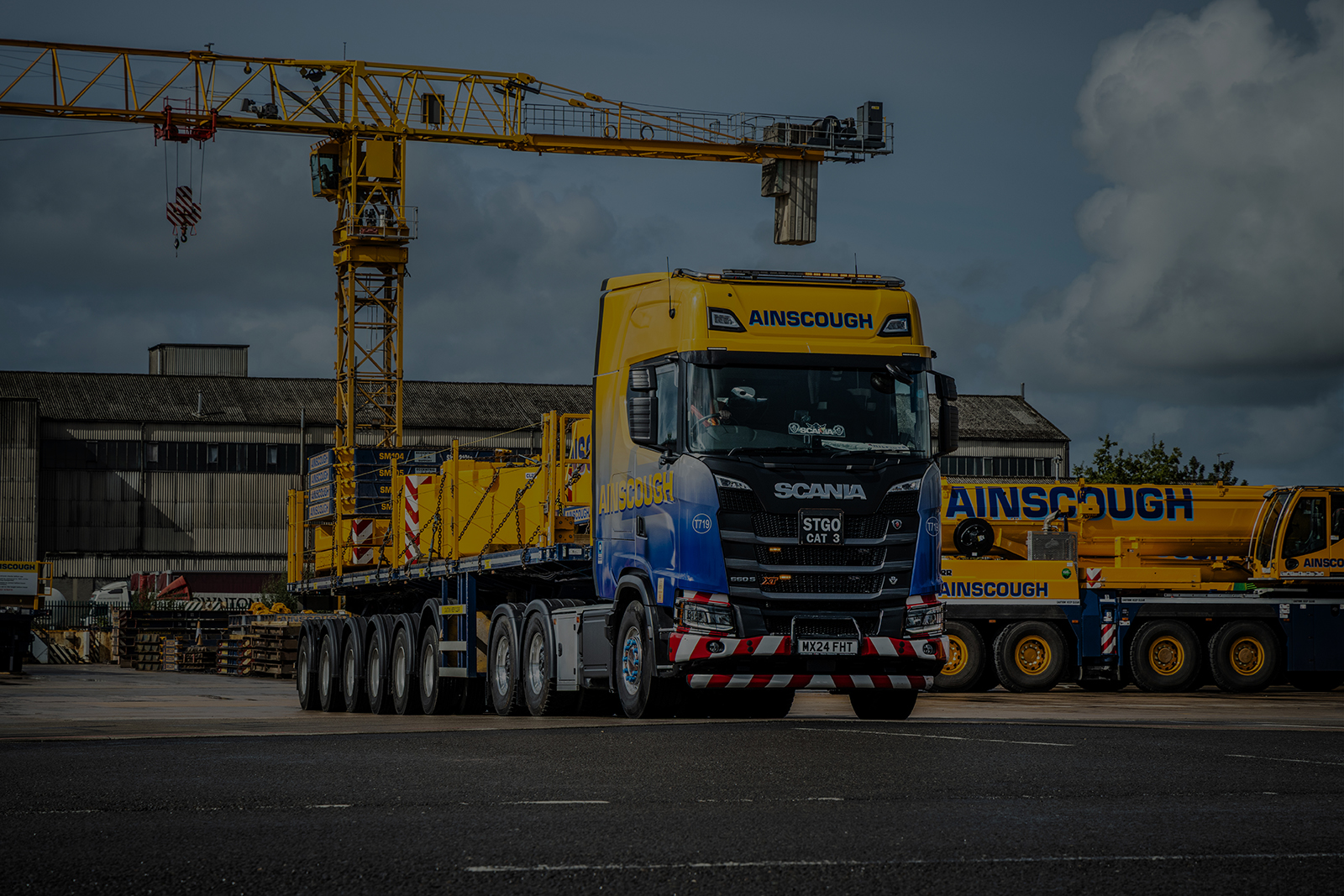
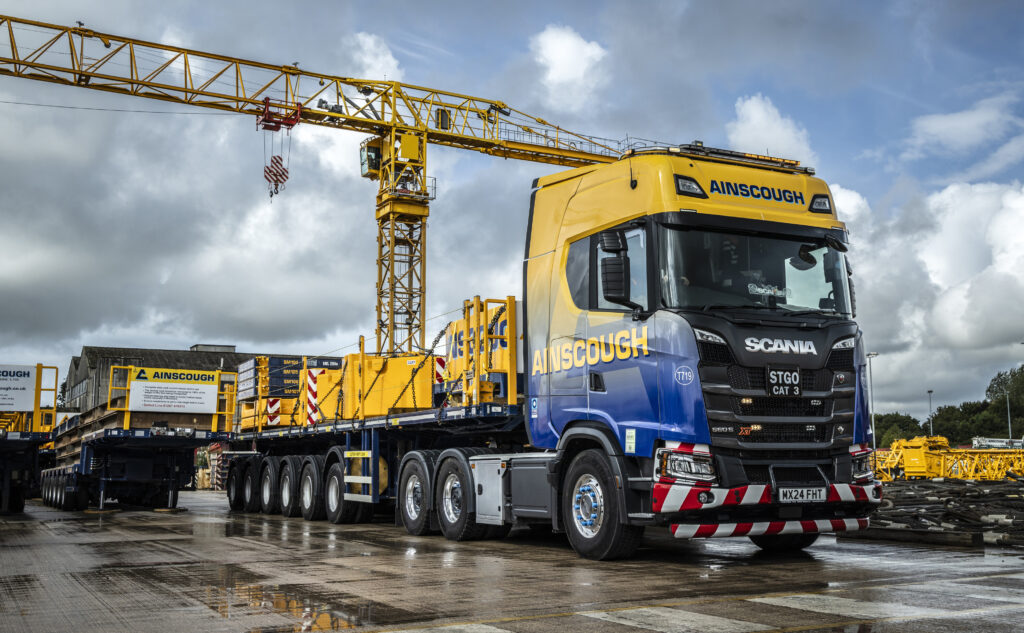
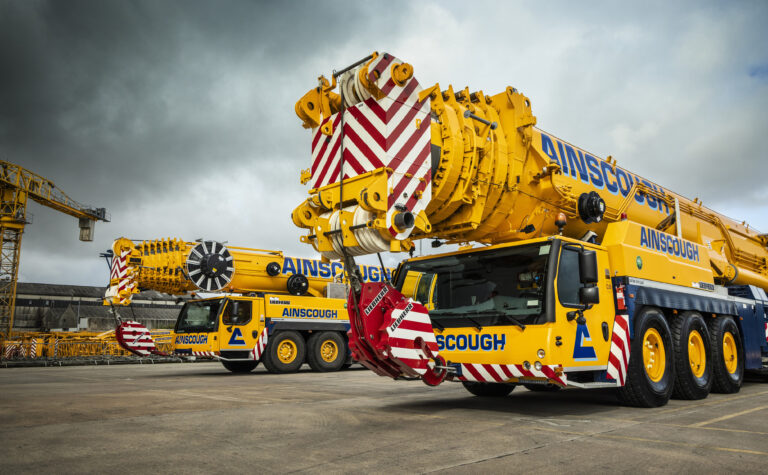
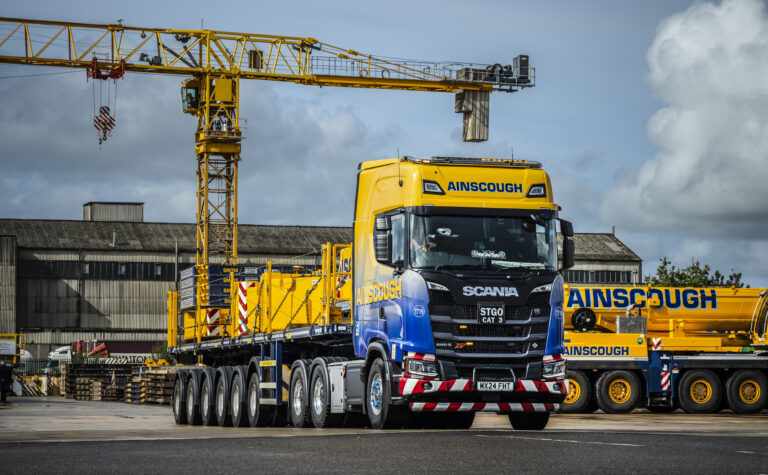
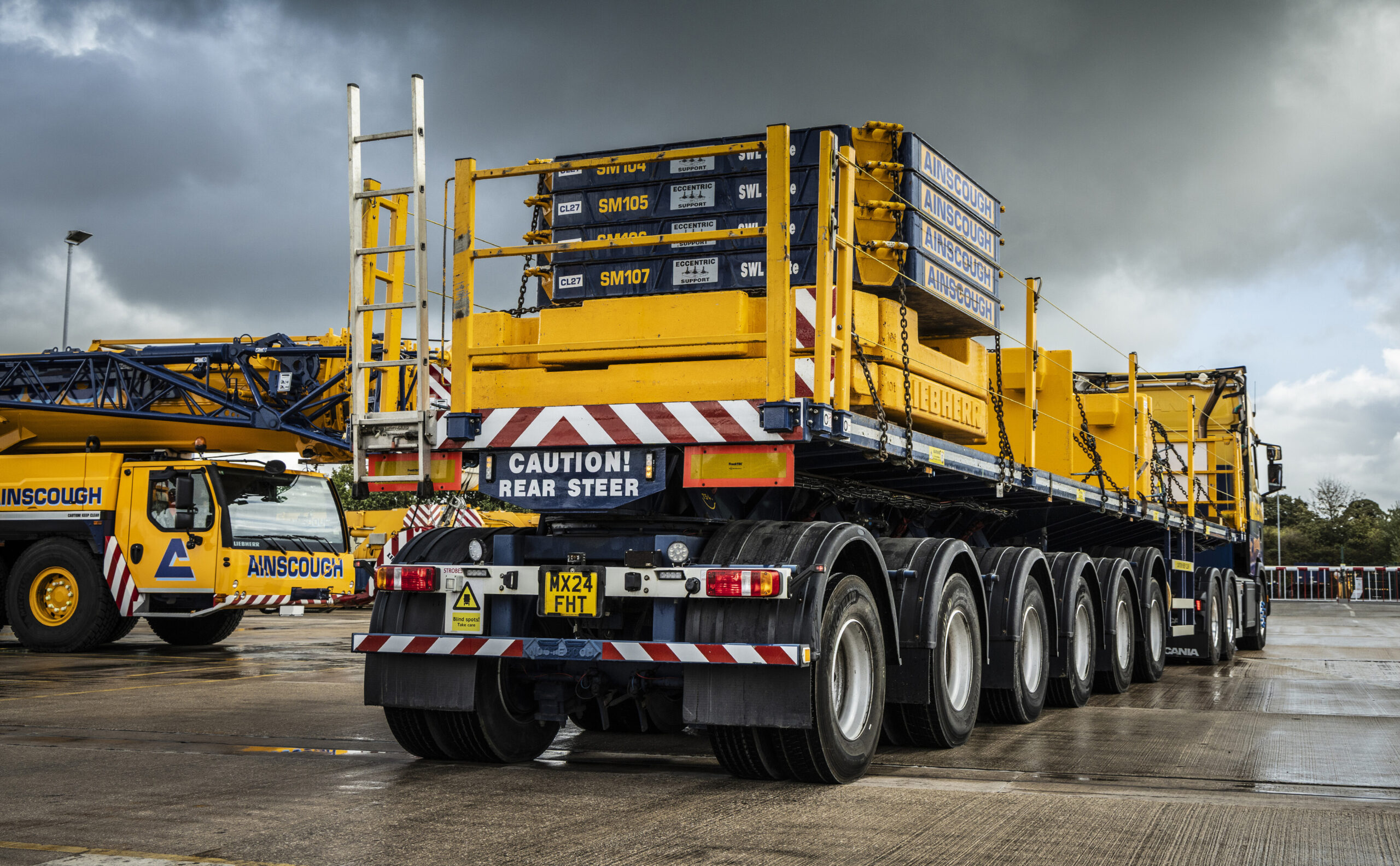
It’s been nearly five years since Ainscough Crane Hire featured in HeavyTorque and in that time, the world has undergone plenty of changes. So just how has the company evolved in the post-COVID world
Given the challenges of a pandemic, rising costs, and the need for greater fleet-wide efficiency, any company that has made it through the last five years relatively unscathed is to be applauded. And one such business is Ainscough Crane Hire, which is building up to its 50th anniversary celebrations in 2026.
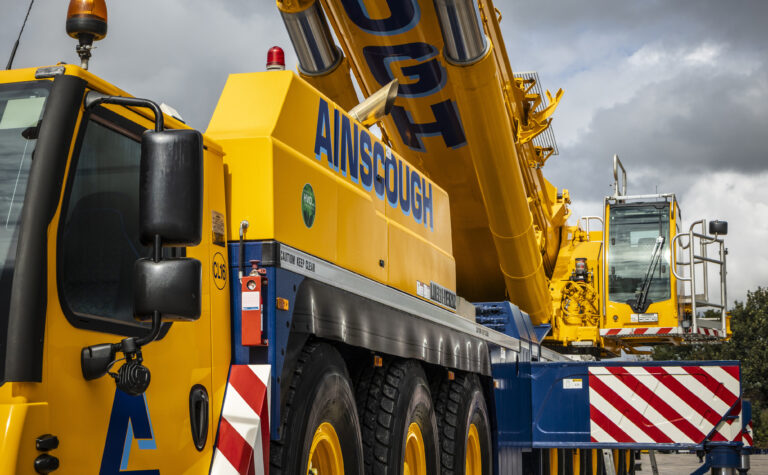
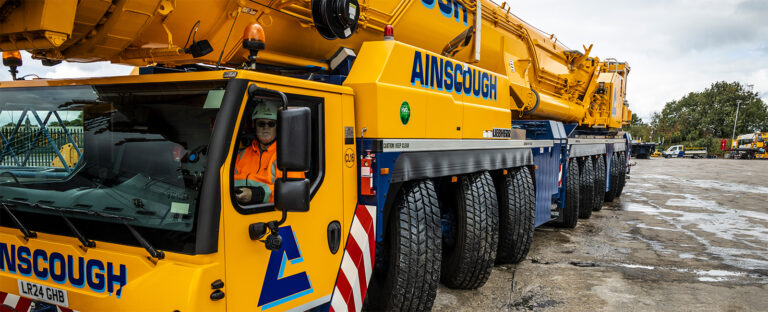
Since it was founded in 1976, this operator has grown from six small cranes and a van to more than 350 cranes and over 150 trucks, vans and smaller items of plant. What’s more, Ainscough Crane Hire – recognised as having the largest heavy cranes division in the country – now boasts a national network of 30 locations with a workforce of more than 900.
One of the key figures in the business is Chris Britton, who is head of operations support and was previously the general manager of the heavy cranes and transport division. “I changed my role about 12 months ago and now I’m concerned with looking after and developing strategy, policy and agenda to ensure that service delivery for our operational guys is up to scratch,” explains Chris.
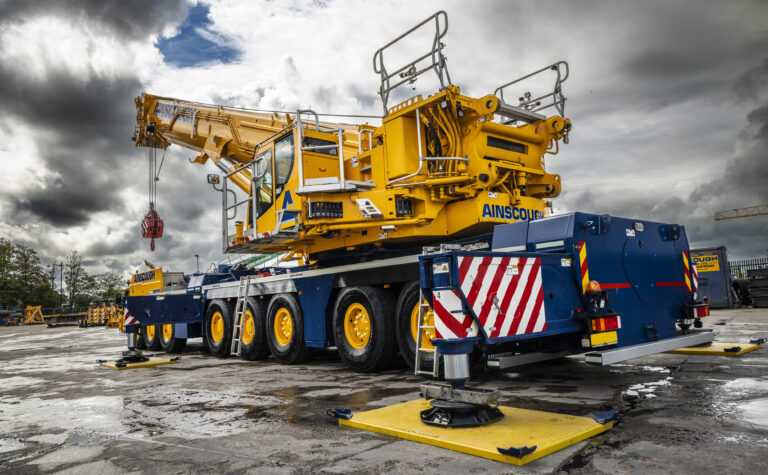
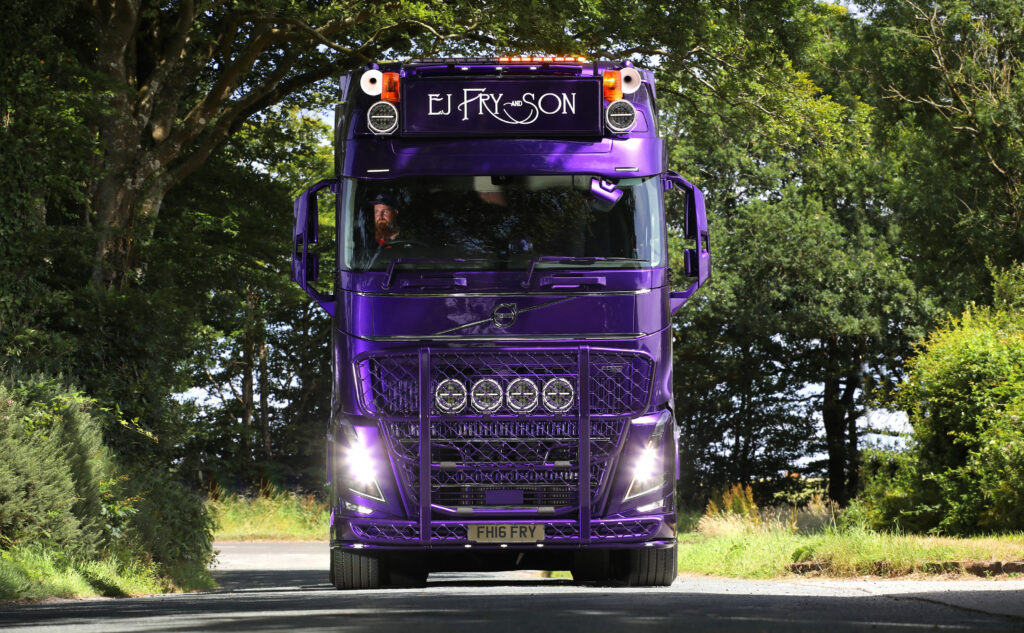
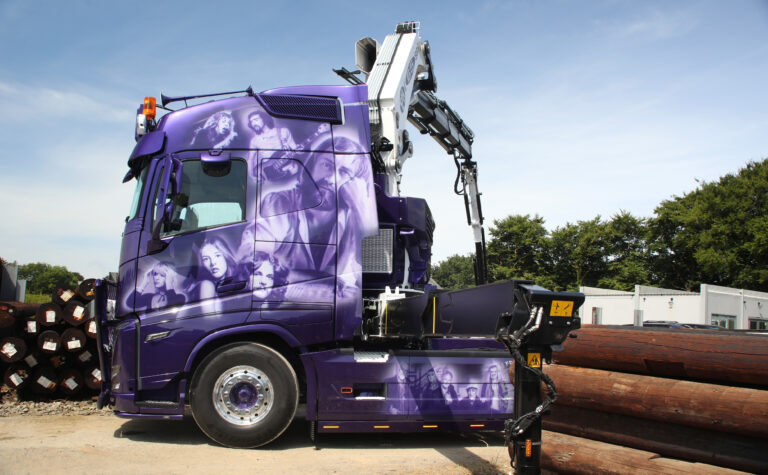
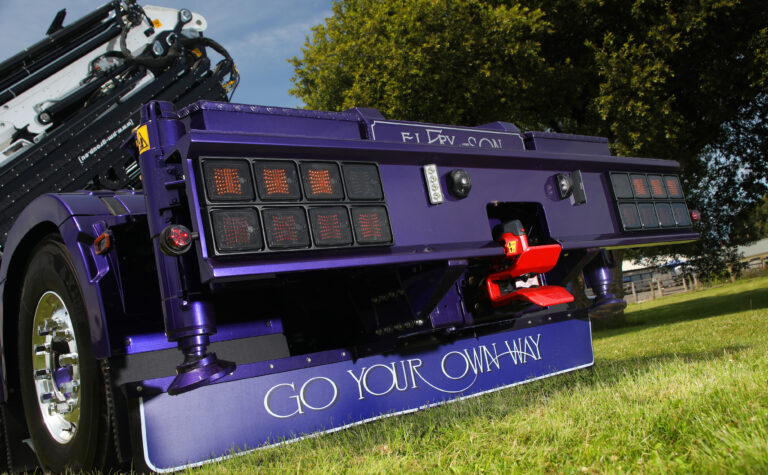
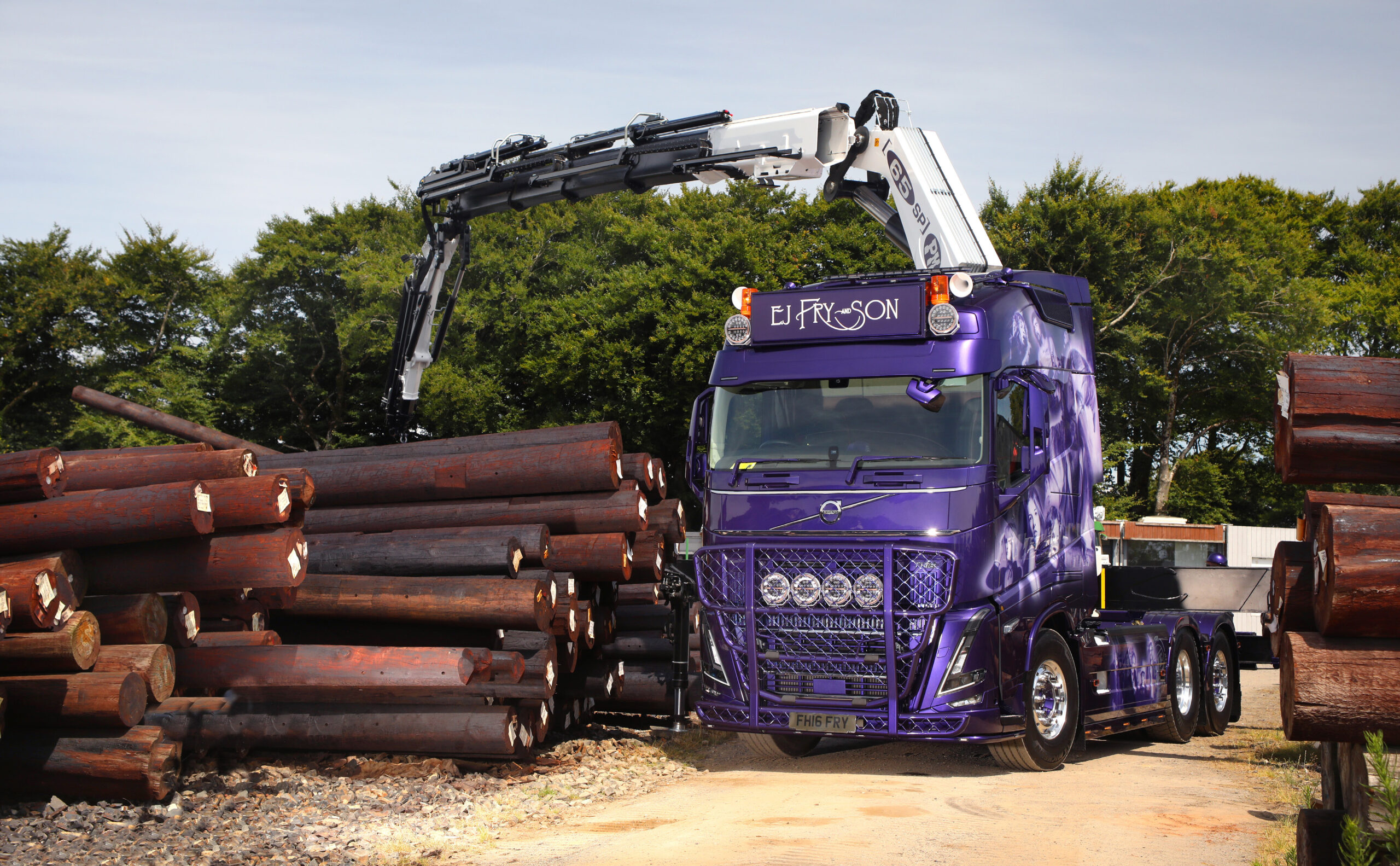
Power network pole erection is a growth business that has been boosted by the country's plans for more electric vehicles. And that suits Cornish firm EJ Fry Transport & Plant Hire rather well, as Steve Banner reports
Unrelenting pressure by government to force us all into electric cars, vans and trucks to reduce harmful emissions means that more electricity will have to be generated to keep those vehicles running.
Much of that electricity will be transmitted by a growing network of overhead power lines connecting wind farms to major urban areas – and while the prospect of more and more pylons marching across the countryside may horrify some people, it is not unpopular with everybody.
An increase in the construction of overhead power cables will certainly benefit family company EJ Fry Transport & Plant Hire, which celebrated its 25th anniversary in 2024.
Based out in the Cornish countryside on a 0.75-acre site at a quaintly-named location called Clump Of Trees between Launceston and Bude, it specialises in hiring out 4x4 pole erection lorries to firms that build and maintain power lines. In addition, it hires out a variety of specialist items of plant to the same customers, including tracked and wheeled excavators, telehandlers and tracked mobile elevating work platforms.
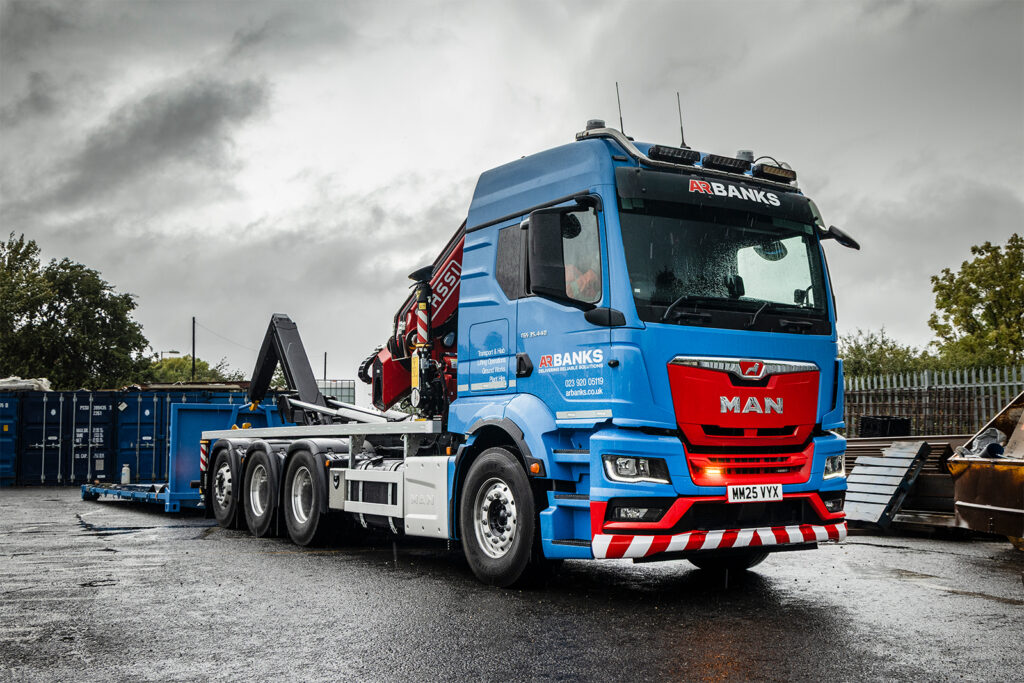
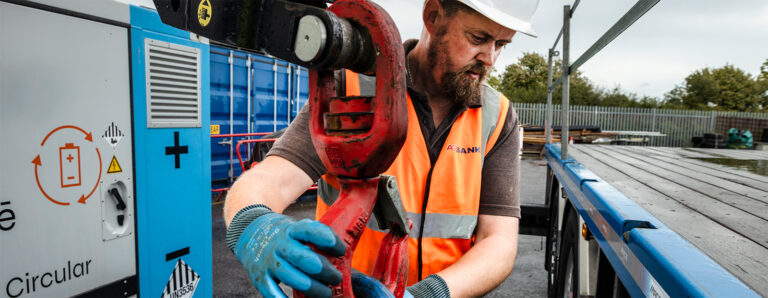
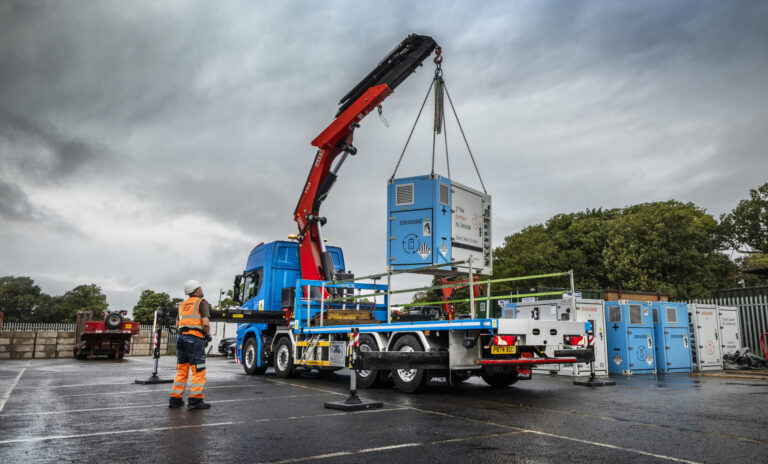
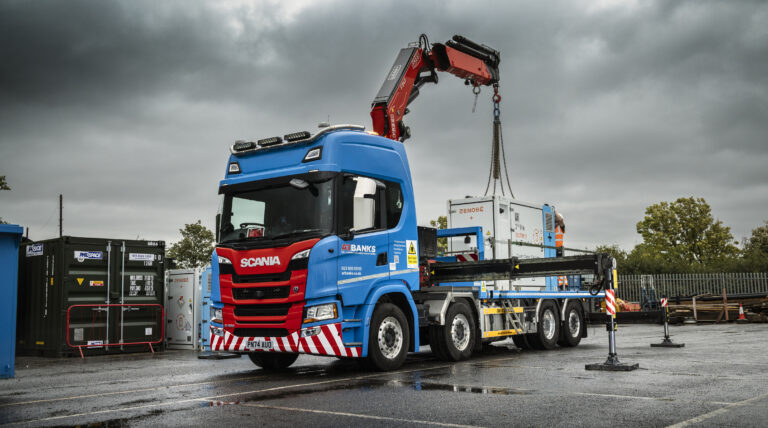
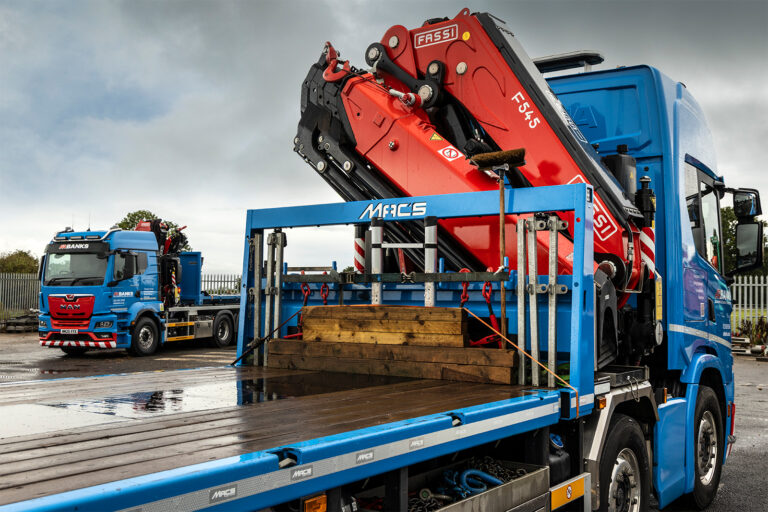
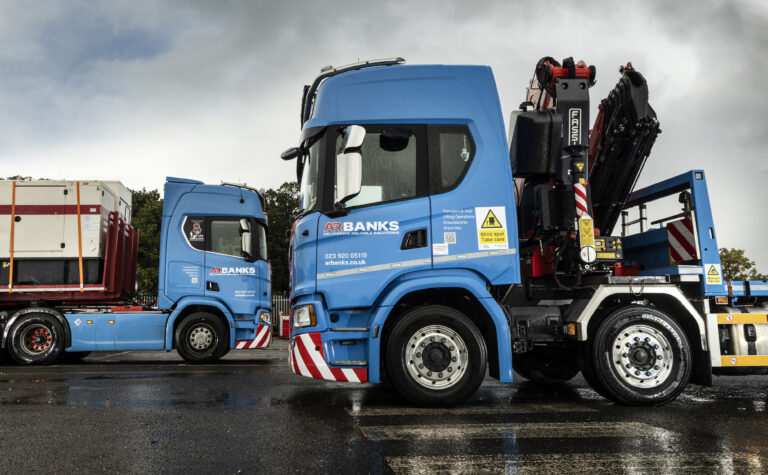
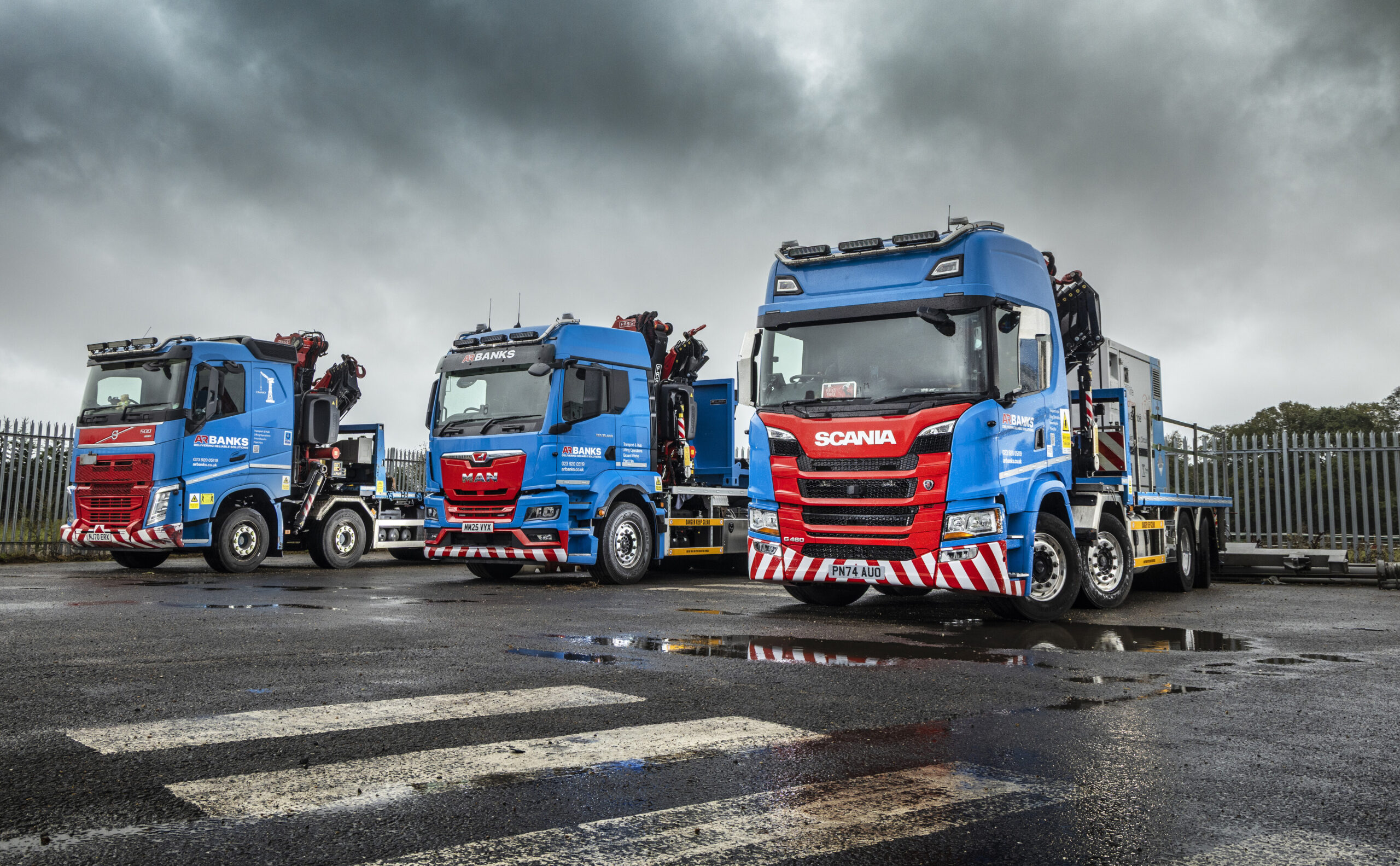
A R Banks has come a long way since it started out almost 15 years ago, as the partners behind it have taken the Hampshire firm from simple tipper operation to managing projects of all sizes with an impressive heavy haulage fleet
The husband-and-wife team behind Hampshire-based A R Banks have changed things a bit since the company was formed in late 2011.
The operation started out with tippers working for the big aggregate companies with numerous operations on the south coast. This eventually led to a crane-equipped rigid to deliver bulk bags, which in turn heralded a move to bigger cranes to offer lifting, transport and installation services.
Later on, these were joined by some artics for moving heavier loads and the firm’s own plant for its in-house groundworks division, and these days, A R Banks offers a comprehensive range of services that allow it to handle the organisation and management of projects of all sizes.
Speaking at the firm’s depot on the outskirts of Fareham, in Hampshire, founder and director Stuart Banks is happy to tell us more about the company’s development and the challenges he and his wife Sarah have faced.
Bob Beech traces the history of Volvo's heavy haulage offerings in the UK over the years and the development of its automated i-shift for this sector, from its earliest days up to its latest incarnation in the new FH16 780
Volvo has been in the UK's heavy haulage market for six decades now, first coming to the attention of British operators in the late 1960s.
Initially, its diminutive F86 was of limited appeal for heavy work, but some operators used them with lowloaders. A few months later, it launched the F88 with its tall, well equipped sleeper cab and a design gross weight of 48 tons as a 4x2 tractor, which could be increased to 70 tons with a hub reduction drive axle. It was available in 4x2 and 6x2 form with a hydraulically lifting tag axle.
A year or two later, a 6x4 version was introduced, with tandem hub reduction drive axles and heavy-duty two-spring steel suspension. A factory rating of 100/110 tons with the lower ratio axles heralded a new dimension to heavy haulage in the UK. Despite its capacity of just 9.6 litres, the TD100A engine used a turbocharger to produce 235/240hp, which was quite a bit of power for that era.
Many drivers were used to bigger capacity naturally aspirated engines in British trucks that often produced under 200hp.
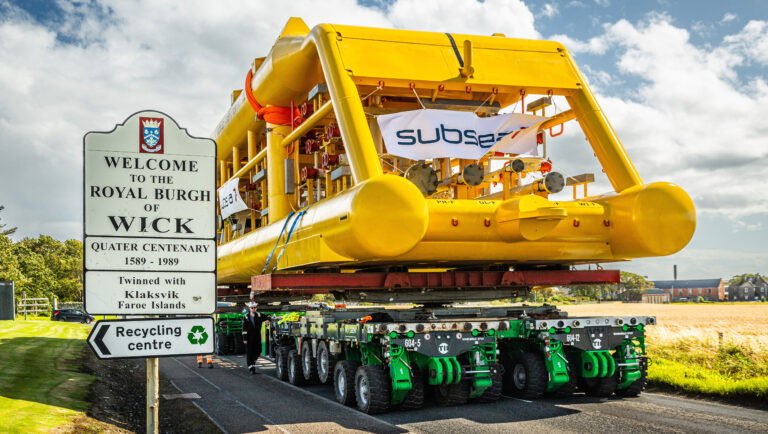
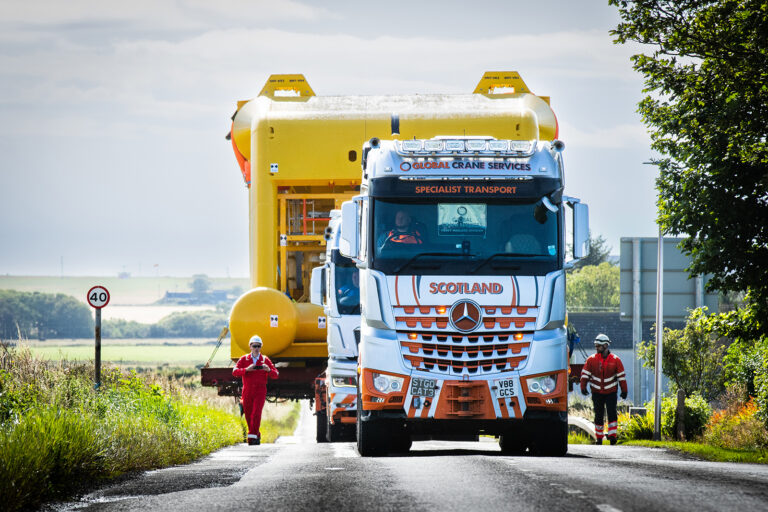
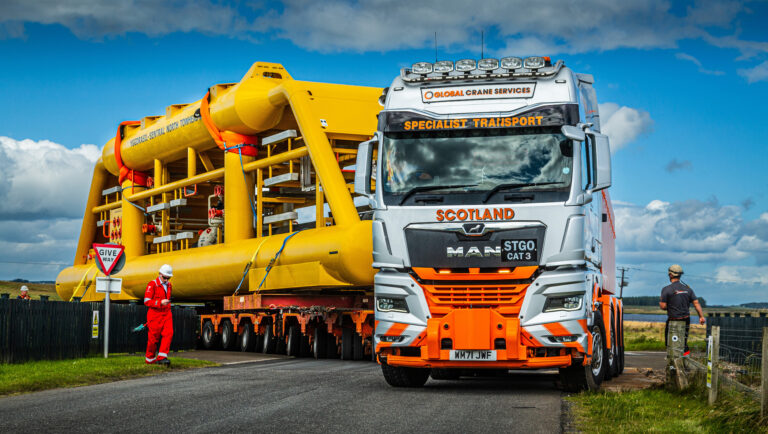
Offshore energy services provider Subsea7 has a lot to take into account as it regularly moves massive towheads used by the North Sea oil and gas sector through the Scottish town of Wick and beyond
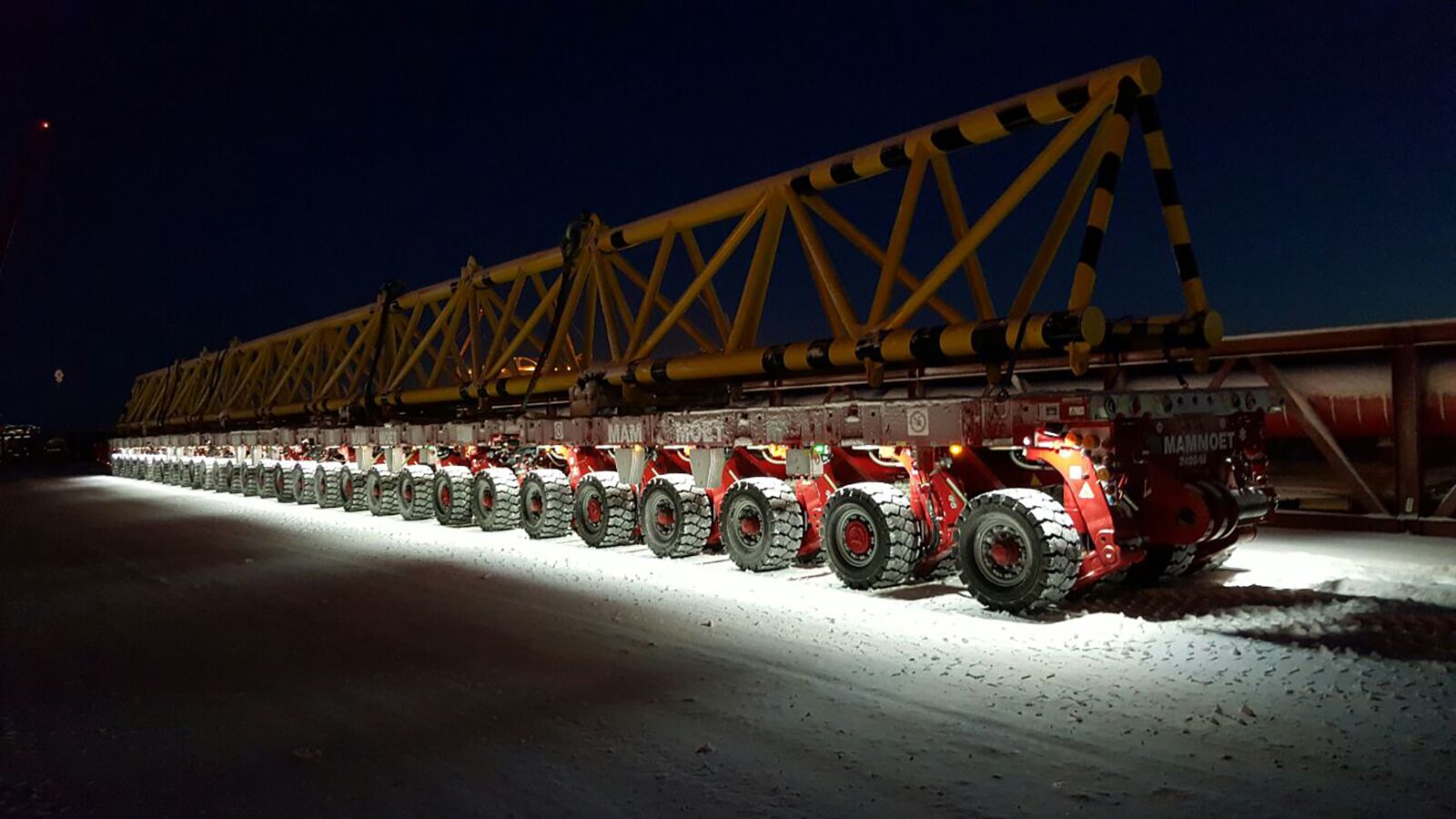
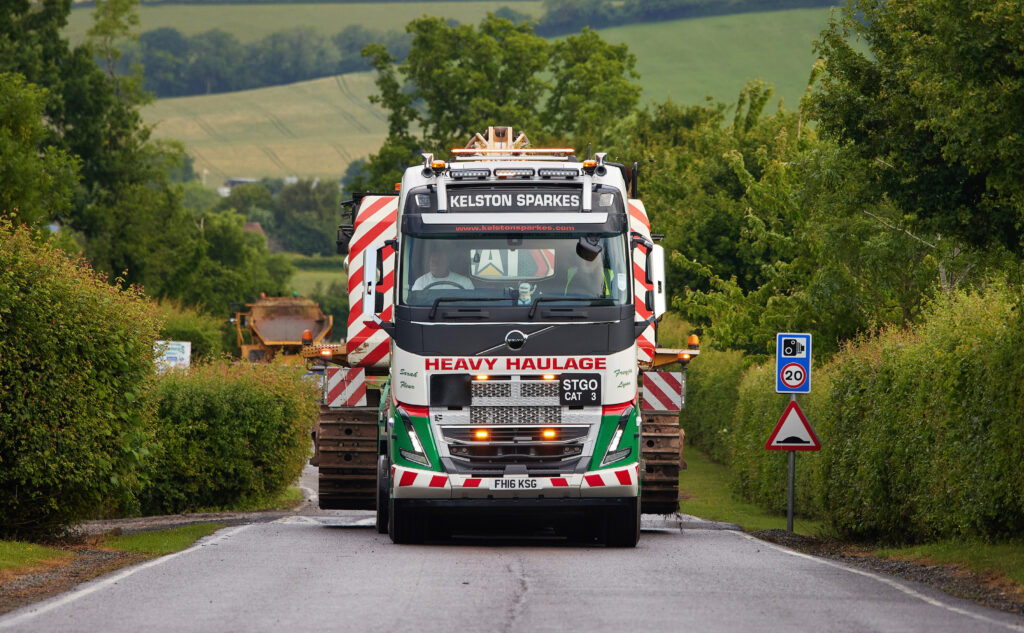
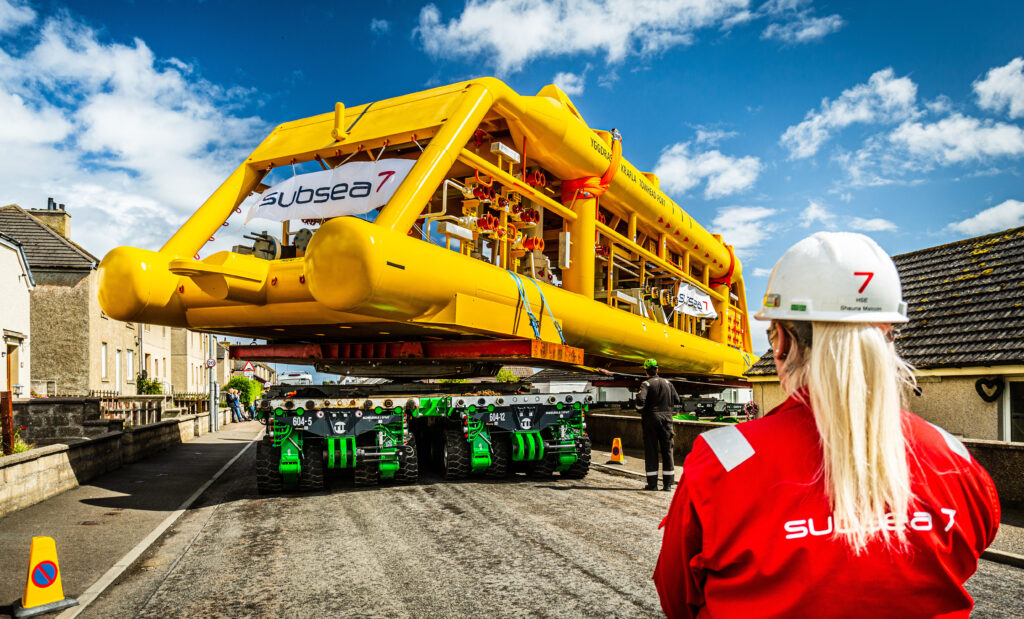
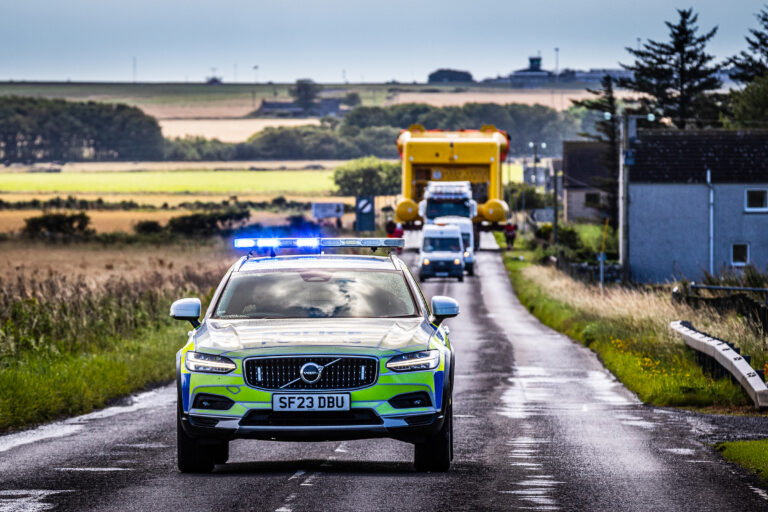
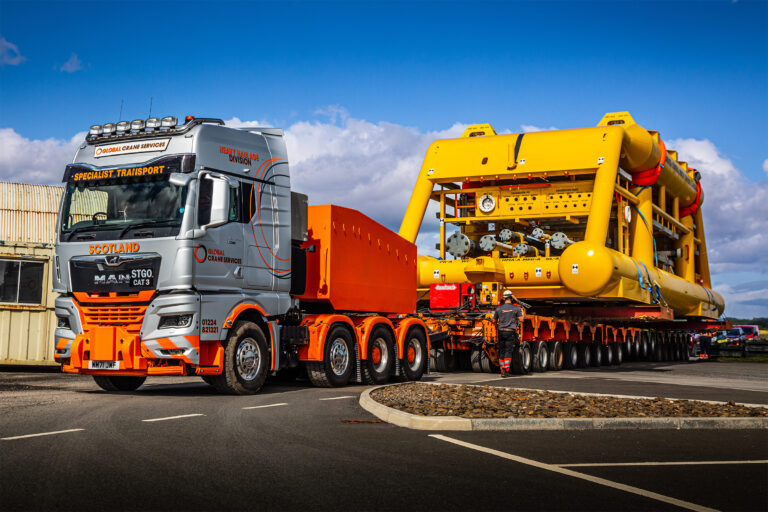
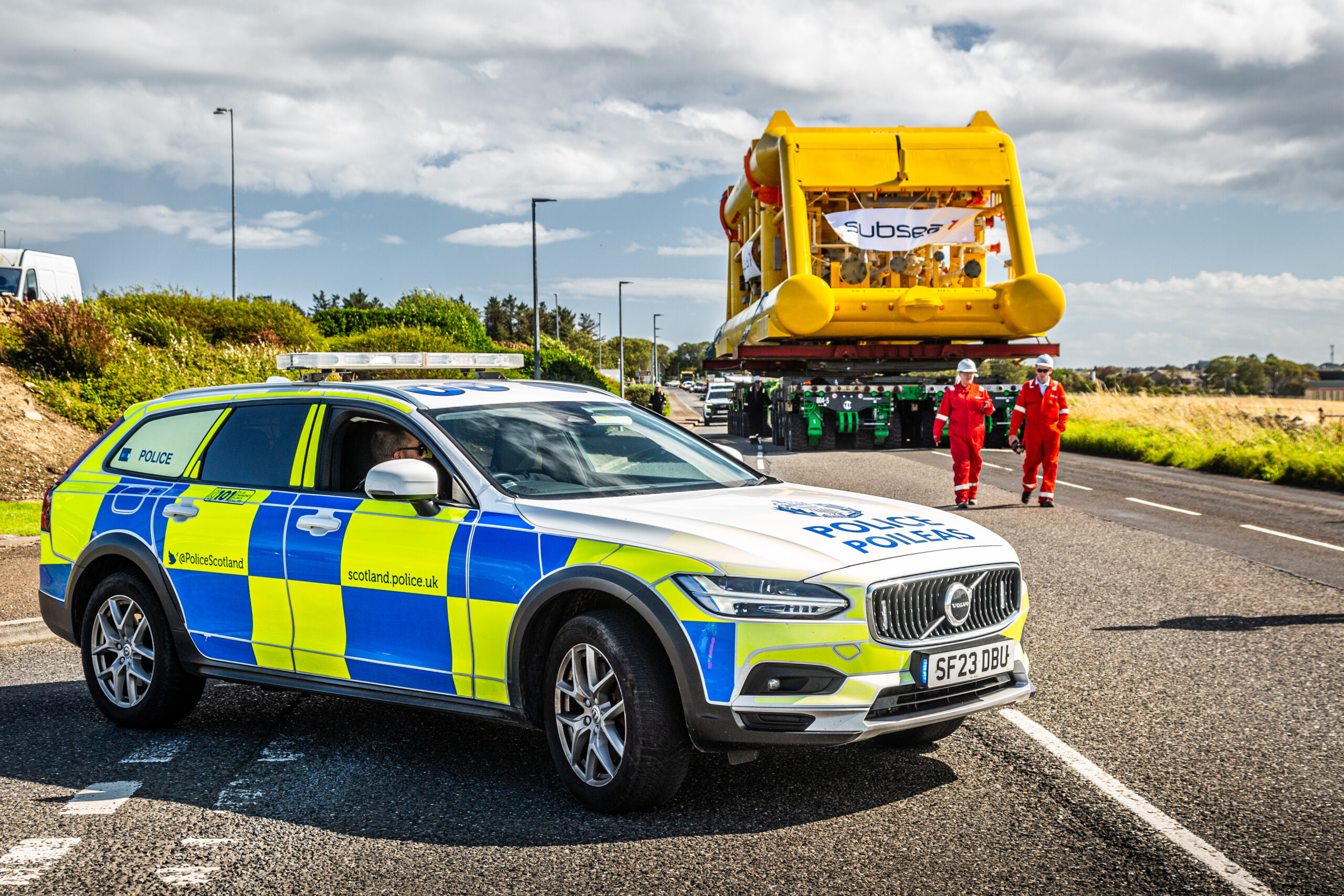
The photography supporting this feature is of two individual towhead movements, Sentral North and Krafla. Each movement consists of two legs - one from the Port of Wick to the industrial park on self-propelled modular transporters (SPMTs); and the other from there to Wester by truck and trailer. Each towhead movement is completed on consecutive days. Krafla is shown here between the port and the industrial park and completed its move to Wester the next day; while Sentral North is shown on its way from the industrial park to Wester, after arriving at the industrial park from the Port of Wick the day before.
Painstakingly inching a towhead through the narrow streets of Wick in the far north of Scotland – often using self-propelled modular transporters (SPMTs) with bolster turntables – requires infinite care and endless patience. A steel towhead that can weigh in excess of 300 tonnes, a is not the easiest of structures to manoeuvre through the narrow streets of the Caithness coastal town.
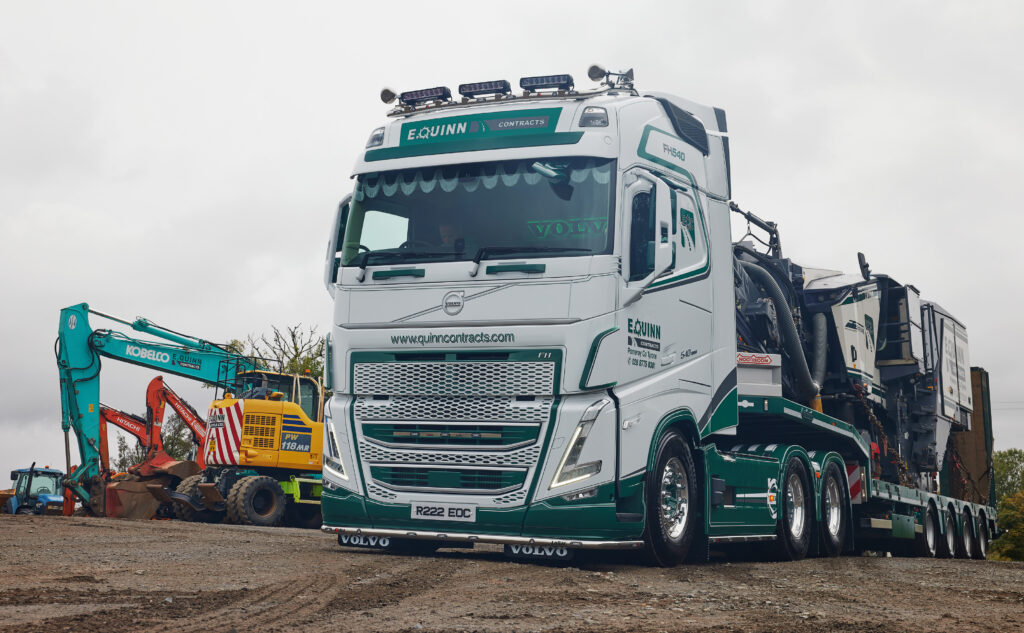
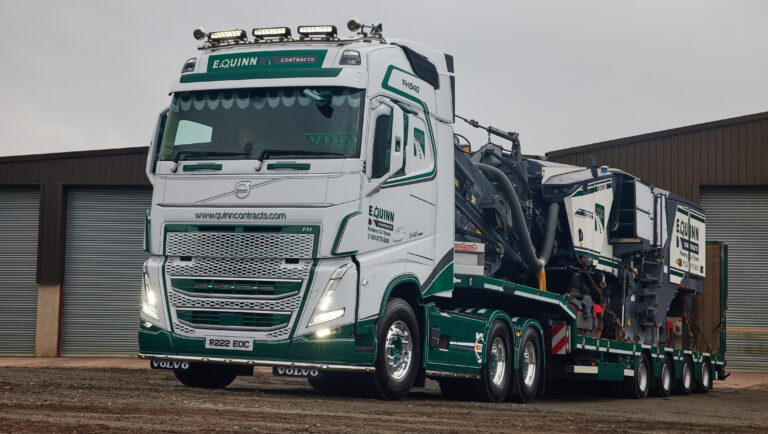
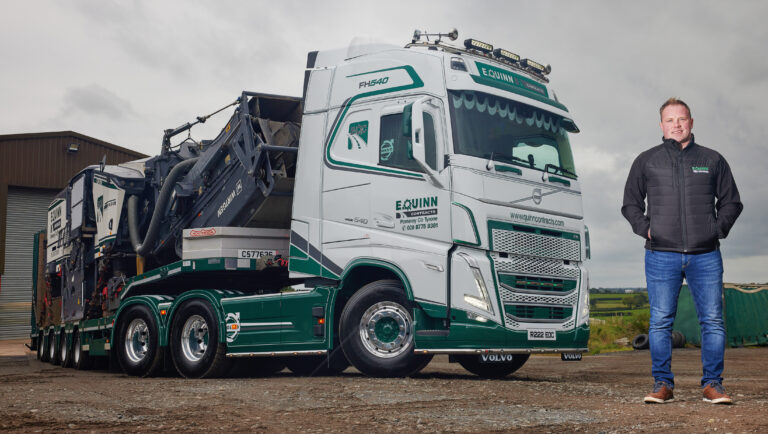
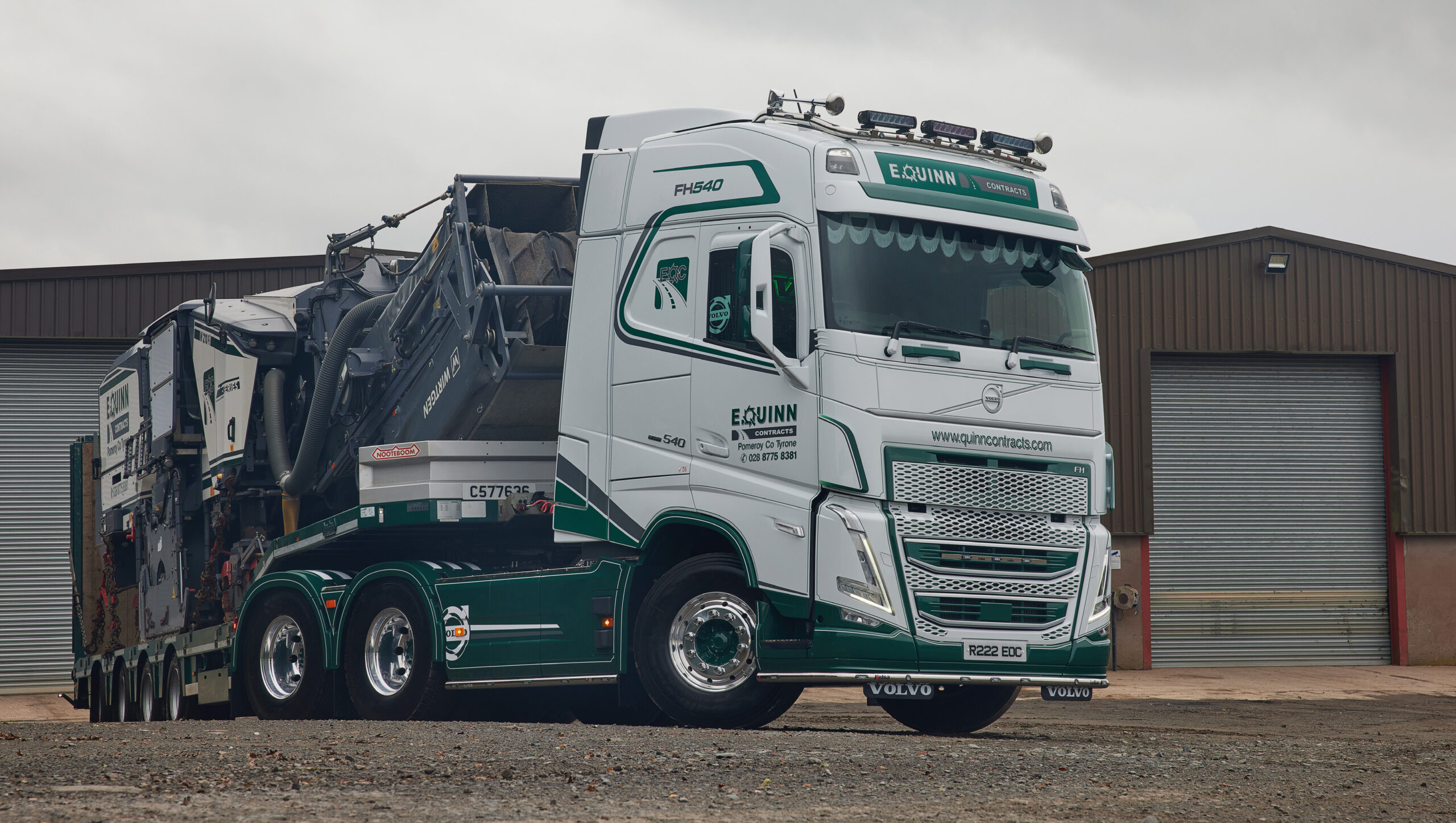
E Quinn Contracts’ one year-old FH 540 Globetrotter TAG looks a picture and drives like a dream, despite the demanding road-planer movements it’s used for
Edmond Quinn started up his company in Northern Ireland “many moons ago”, laughs grandson Ronan, the third generation of the family involved in the business. There are two Quinn companies: E Quinn Contracts, which deals with road-planing and sweeping; and E Quinn Civils, which focuses on groundworks and utilities. There can be some crossover between the operations, naturally, with pipes and water mains often located underneath roads or other areas of tarmac.
Planing is the process of removing the top layer of asphalt, prior to either digging down further to access things below the road or renewing the surface. Quinn’s runs 11 planers which cover everything from residential pathways, pavements and driveways up to main roads and motorways.
Edmond senior started off with a small planer that could cut tracks in the surface to allow pipes to be laid, and he got busy quickly and began adding more equipment.
Today, the smallest planer can cut 350mm while the largest can remove sections of road 2 metres wide.
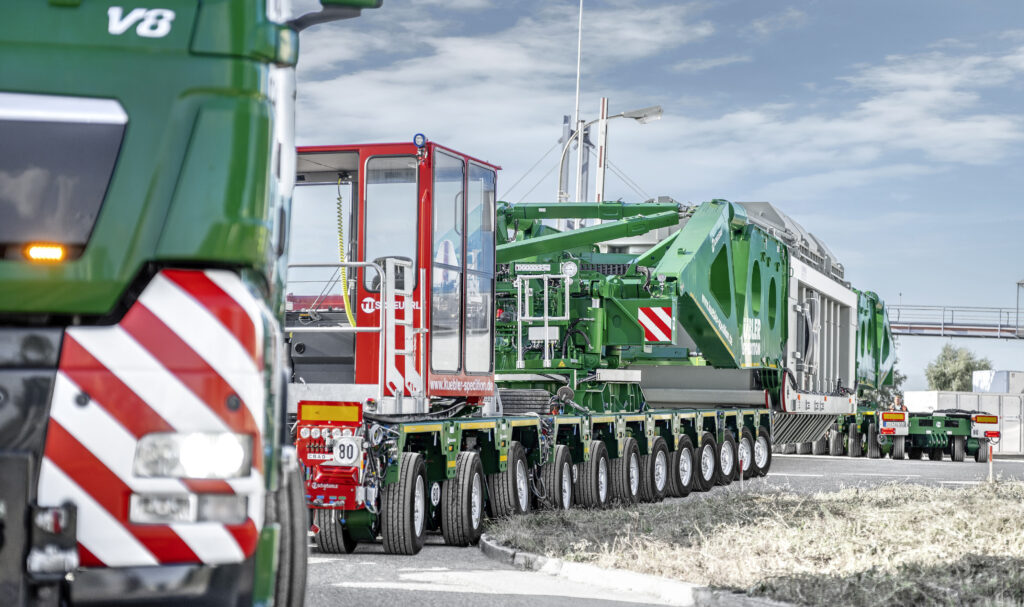
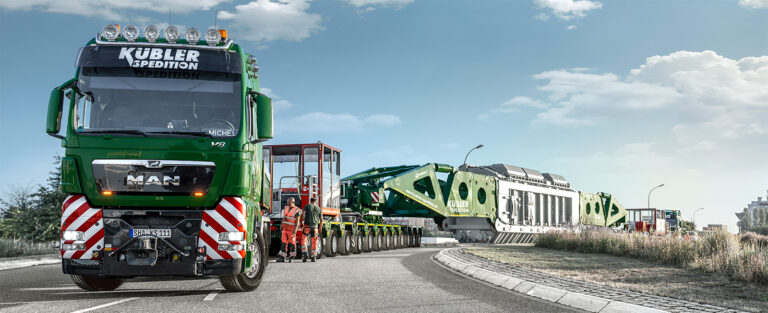
TII Scheuerle’s new STB 320 side girder deck, developed with Spedition Kübler, has successfully completed its first deployment recently in Germany
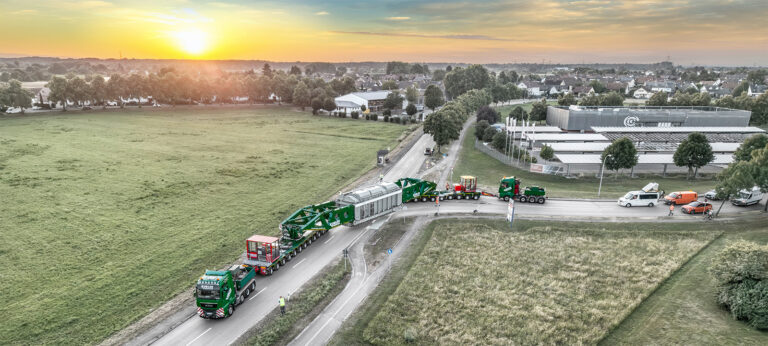
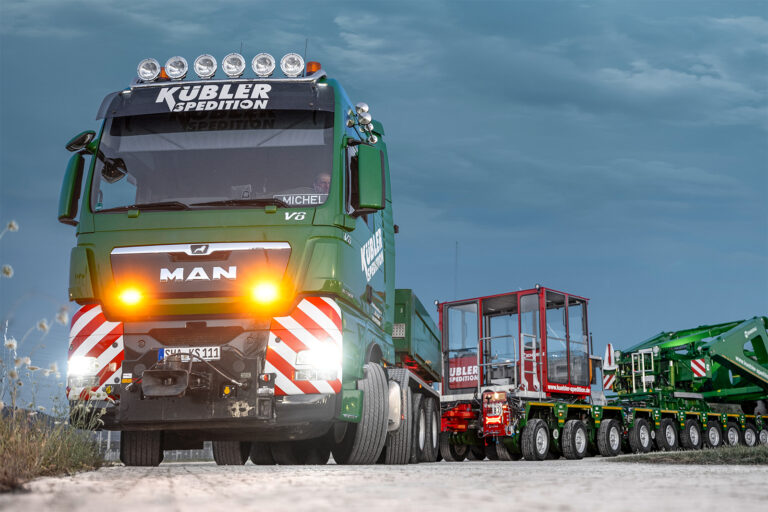
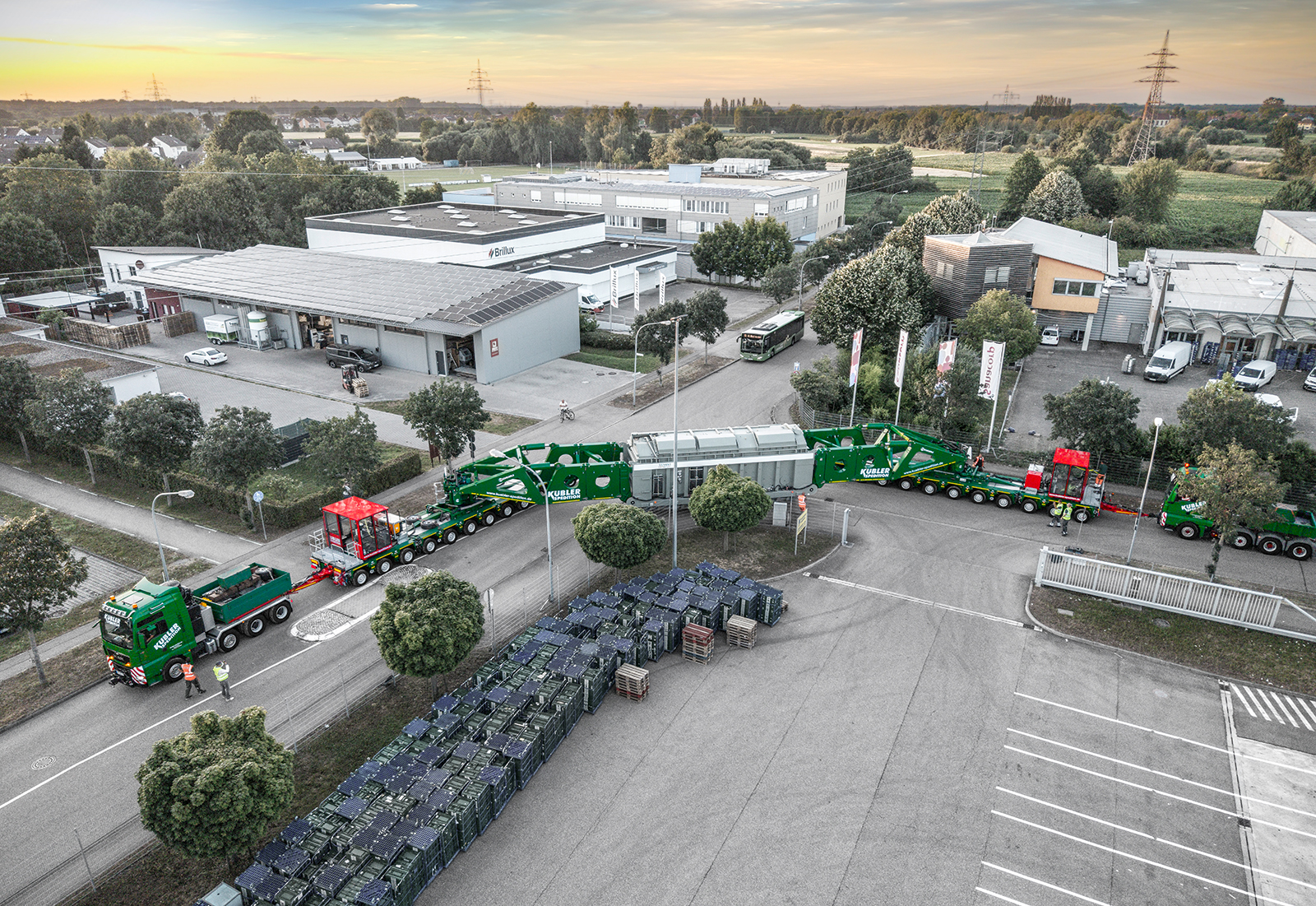
On 9 July, at around 7pm, an exceptional transport operation began near the Offenburg railfreight station in south-west Germany to move a 285-tonne transformer for transmission system operator TransnetBW to the Offenburg-Weier transformer substation about 10km away, as part of a move to upgrade the grid in the region.
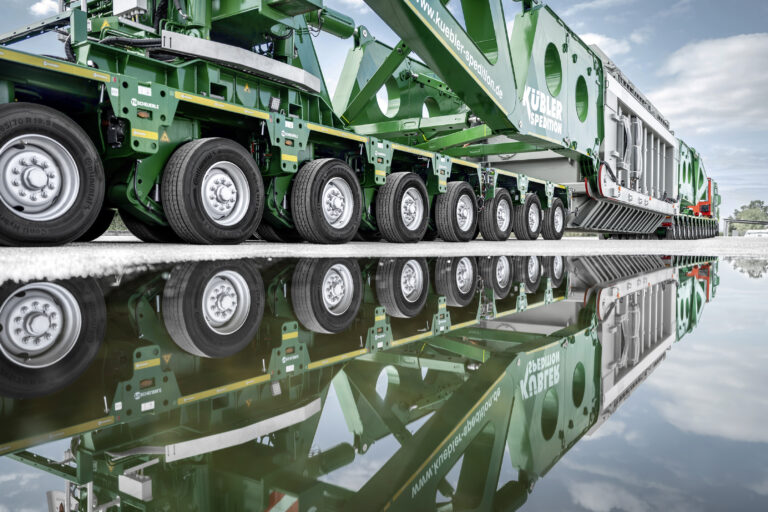
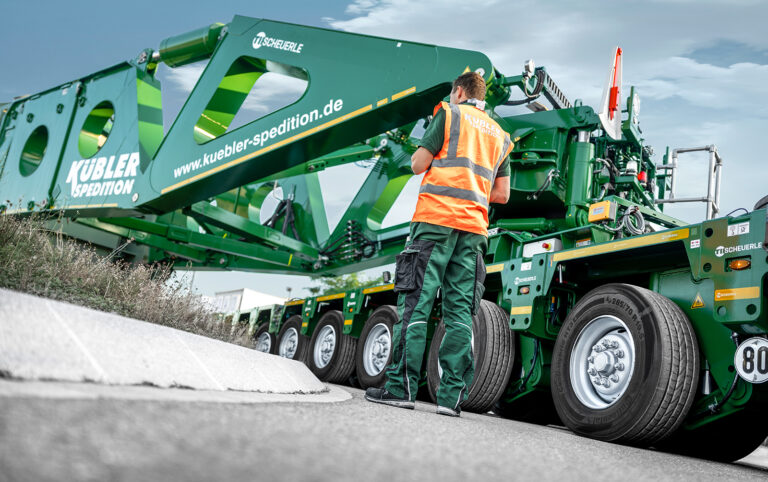
The STB 320 used for the task, designed by TII Scheuerle specifically for moving the heaviest of transformers, completed the job in about three hours, despite weight-sensitive bridge crossings, tight roundabouts and a complex inner-city traffic route.
The STB 320 is a modular, weight-optimised vehicle that was developed in close cooperation with heavy haulage specialist Kübler Spedition, a long-standing user of TII technology, and is directly aimed at fulfilling the requirements of such tricky movements.
The two bridge structures along the route – including the near-80 metre long cantilevered Kinzig Bridge – posed a particular challenge.
ALLMI delivers the latest news, views and events from the uk loader crane sector.
In this edition: Power line awareness; Instructor course growth; PUWER 9.2 compliance; Check their credentials!; Annual membership meetings; BS 7121 Part 4 update; BS 7121 Part 2-4 revision published.
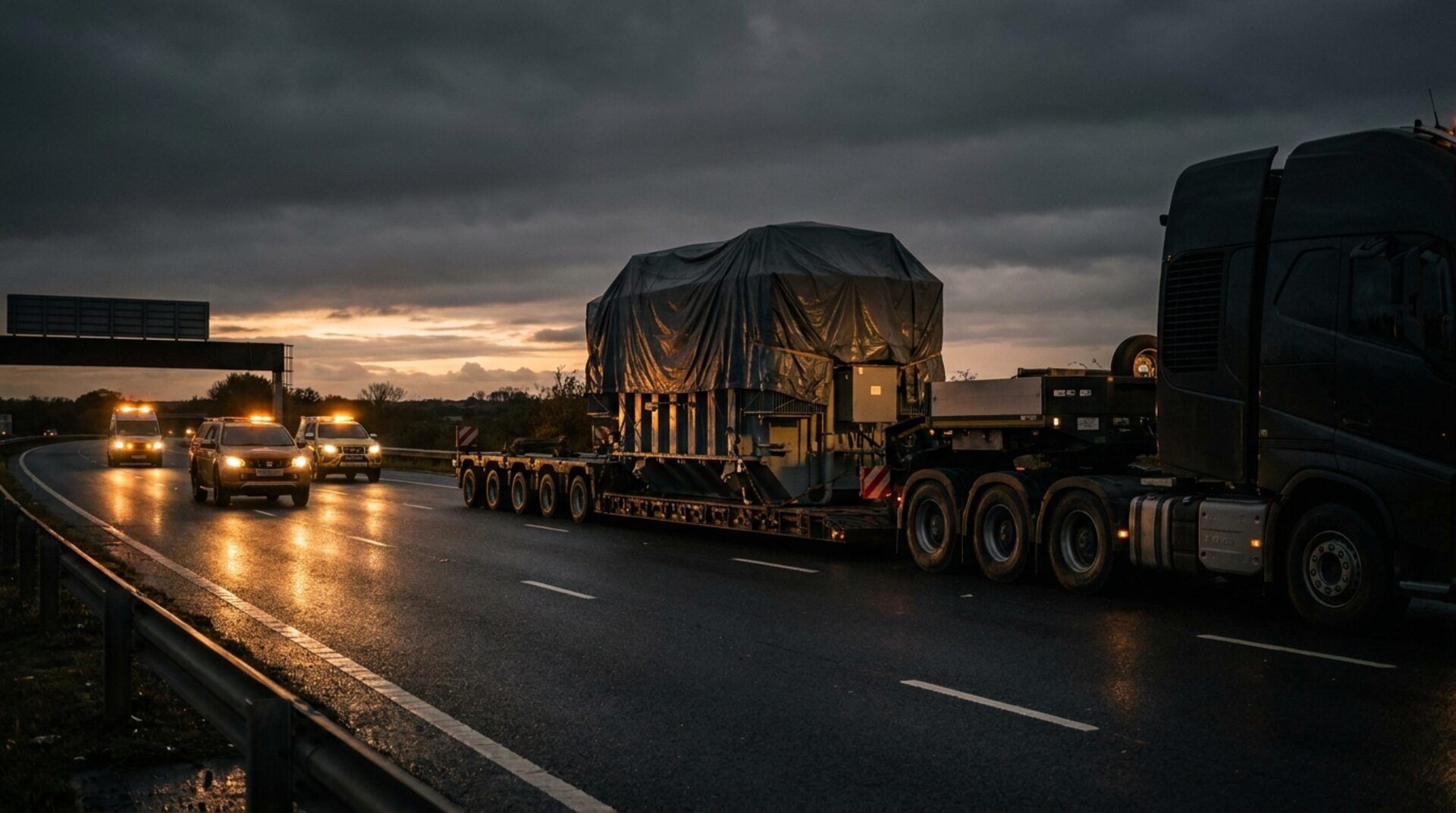
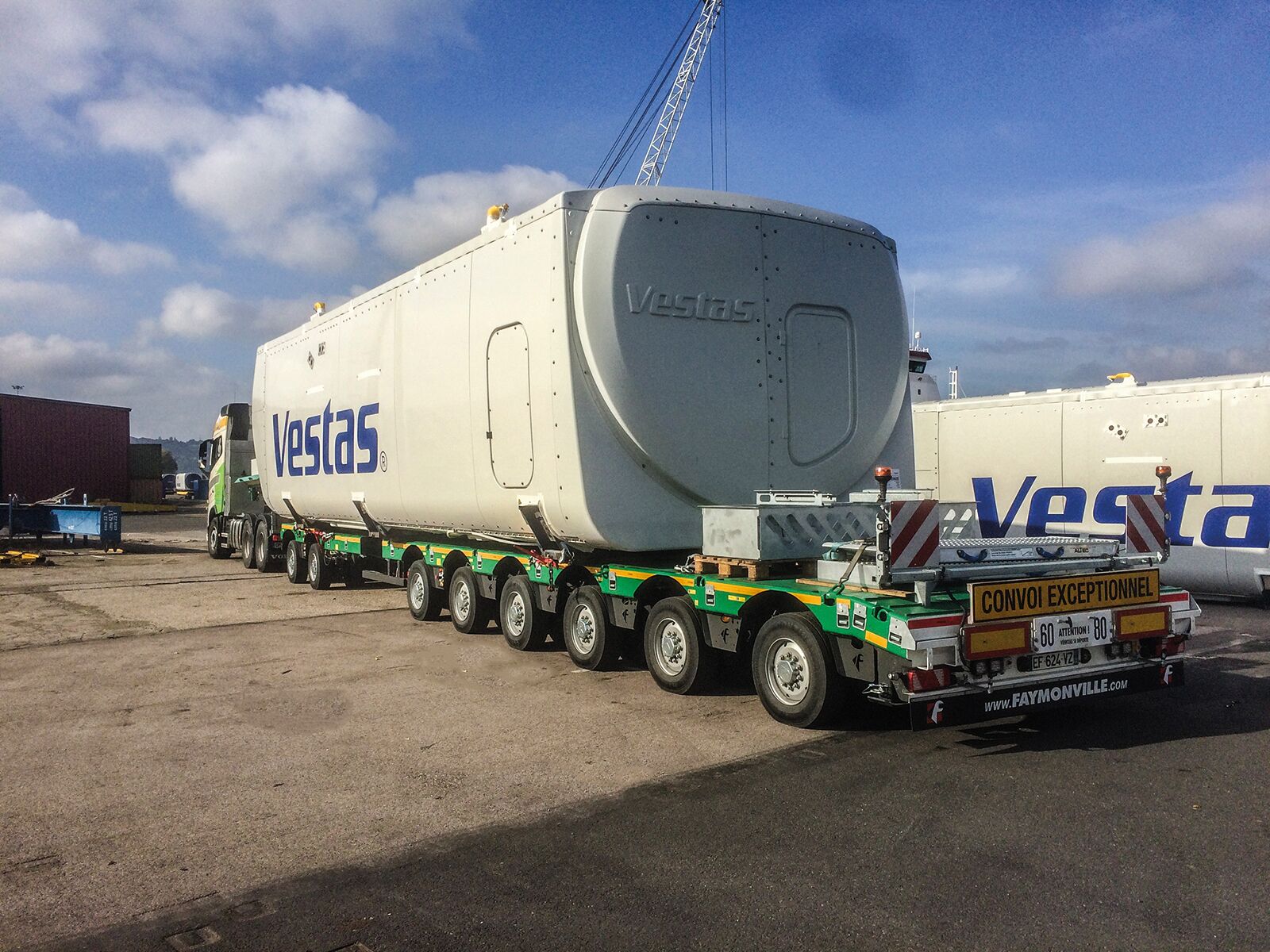
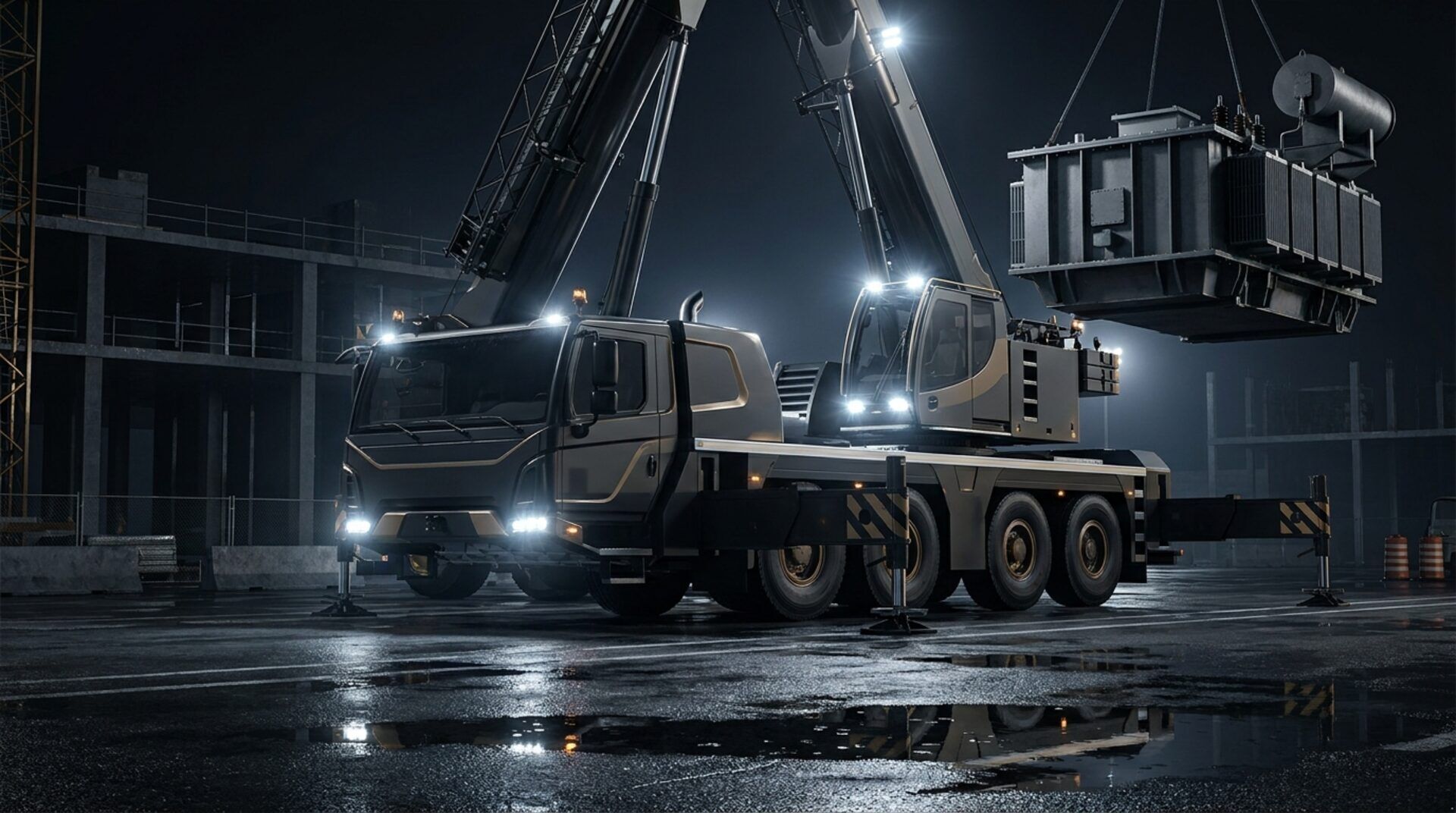
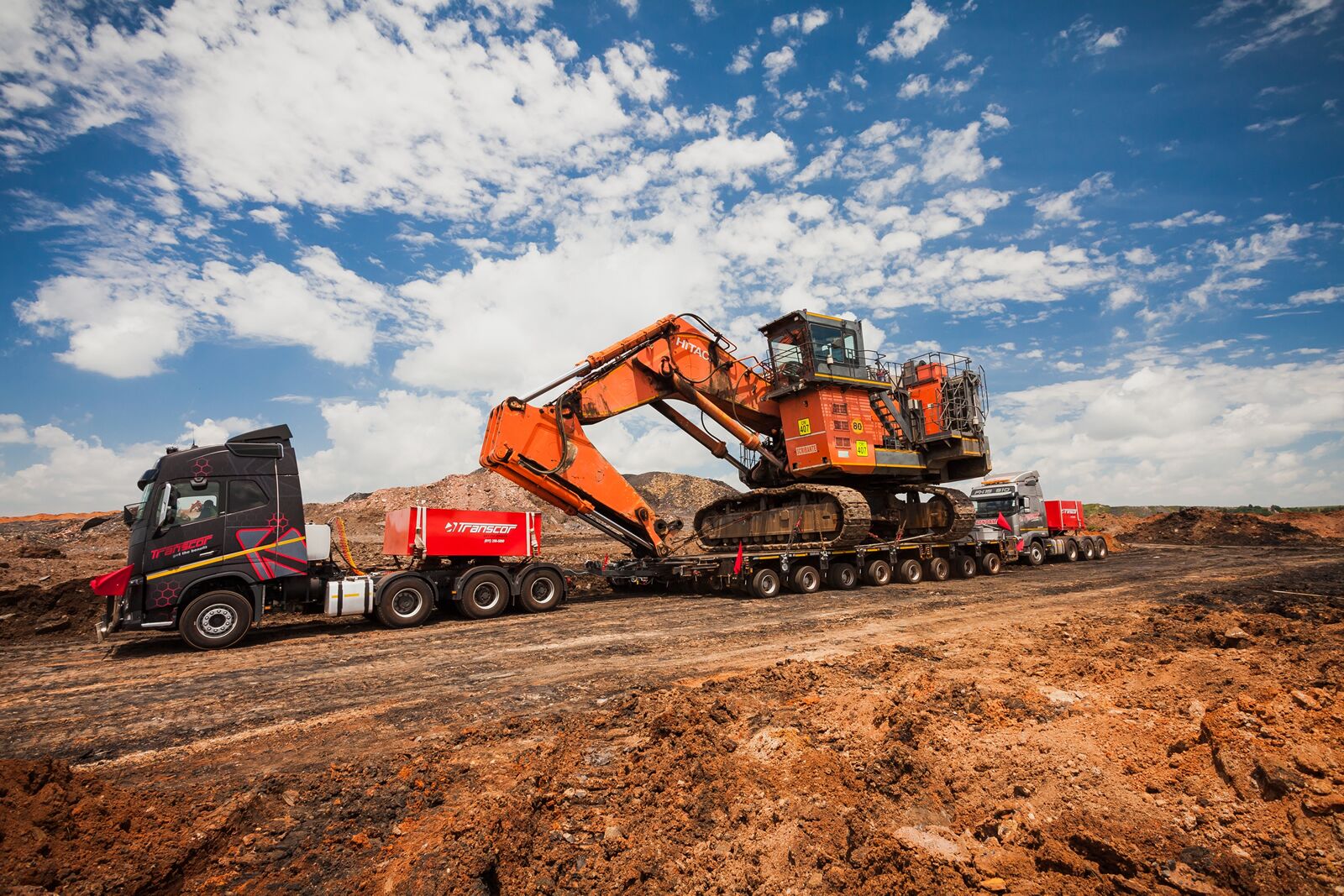
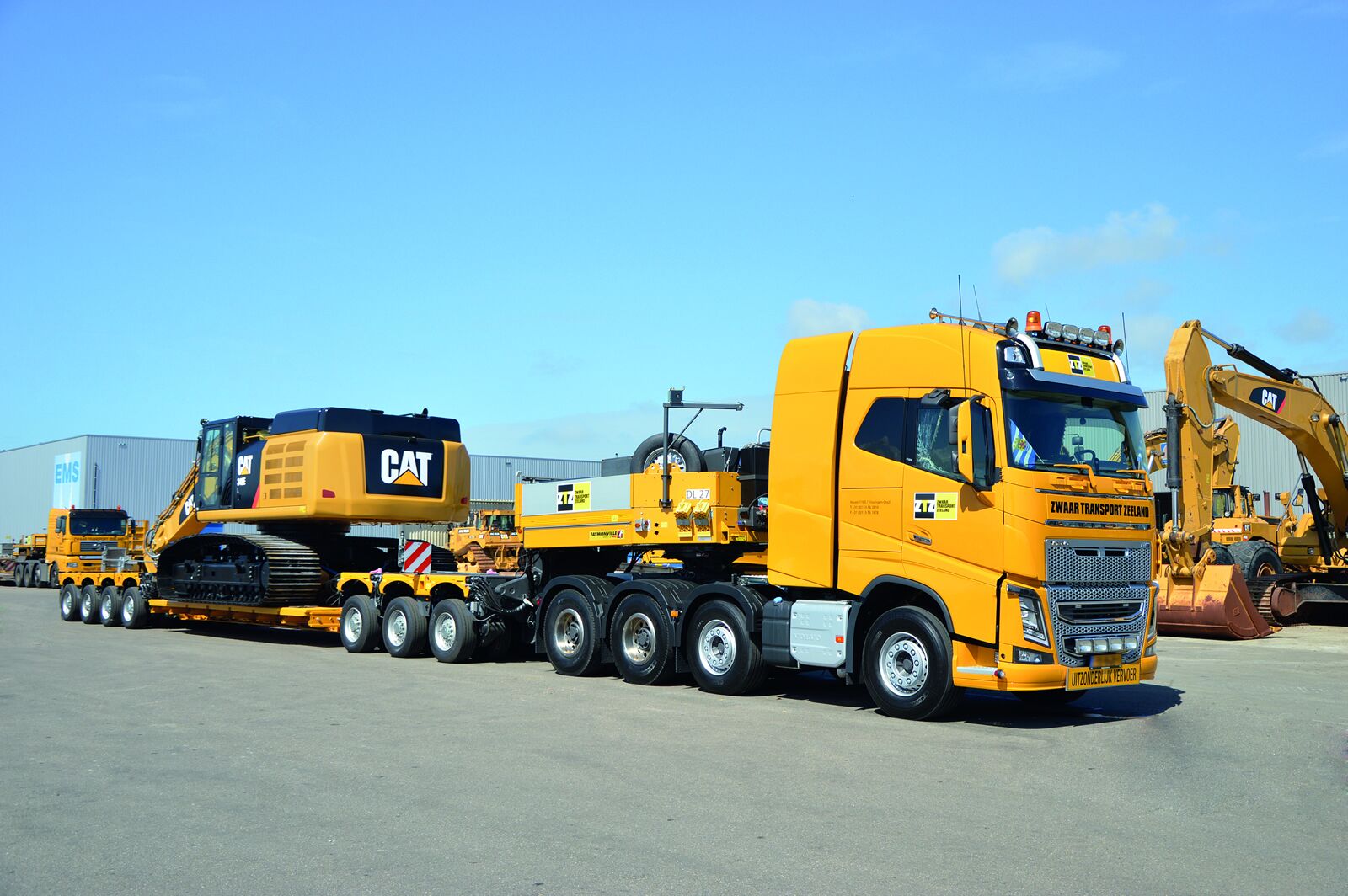
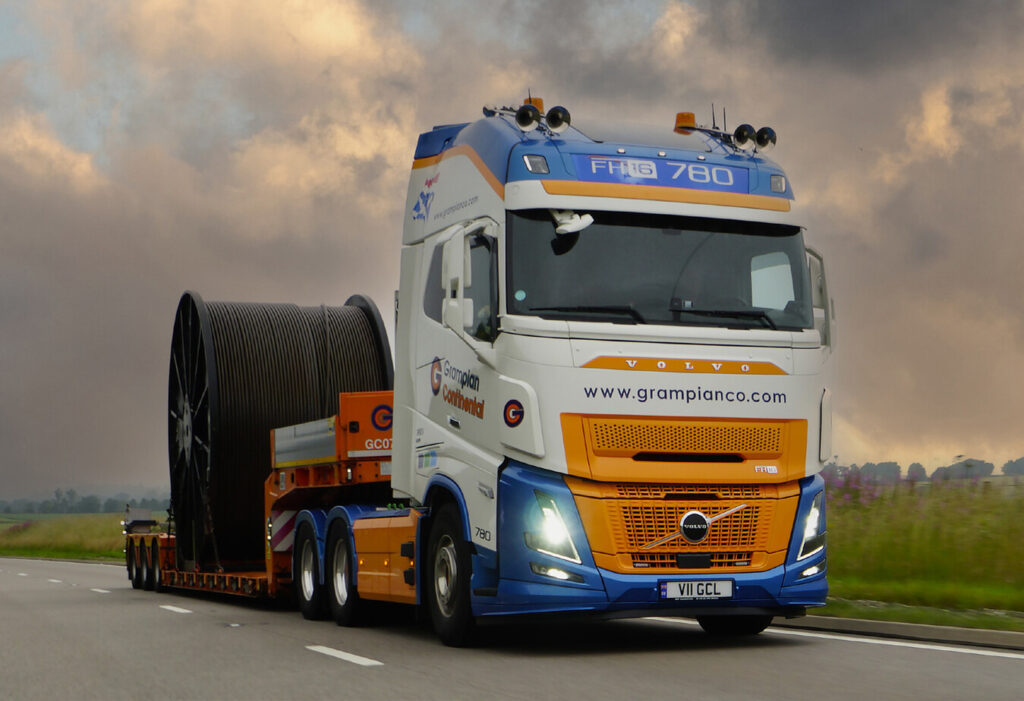
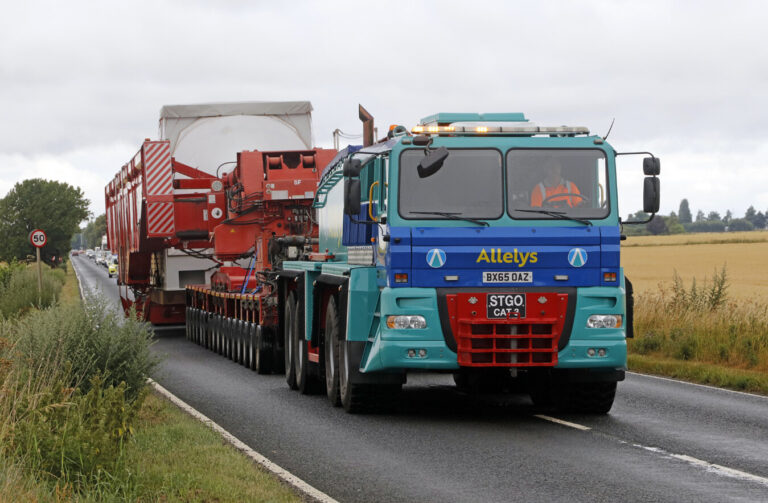
Seen something special on the road? Then upload a picture to the 'Capture of the Quarter' group on Facebook. All entrants that appear here win a copy of HeavyTorque and the winner gets a year’s subscription to the magazine
WE BRING YOU THE LATEST PHOTOGRAPHY COMMENDED BY HEAVYTORQUE. IF YOU’D LIKE TO SEE YOUR OWN IMAGES PUBLISHED WITHIN FUTURE ISSUES - THEN JOIN THE COTQ REVOLUTION TODAY!
www.facebook.com/heavytorque-cotq
HUGE CONGRAULATIONS TO ALL THOSE SHORTLISTED, AND OUR ANNUAL SUBSCRIPTION WINNER
EVAN MICHAEL!
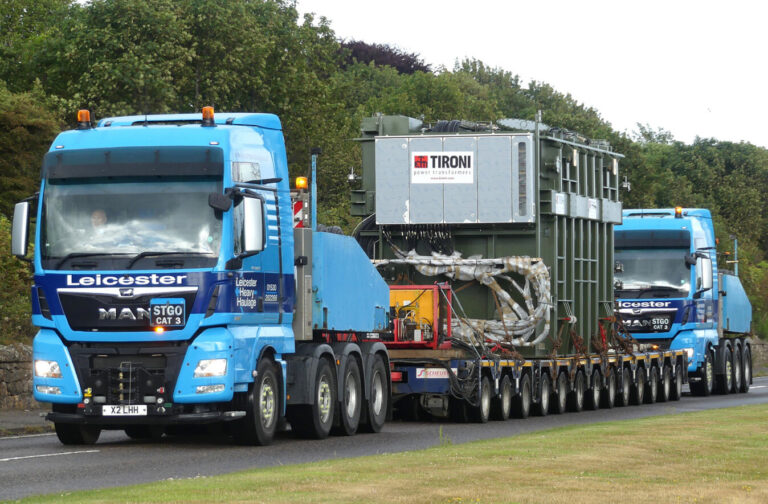
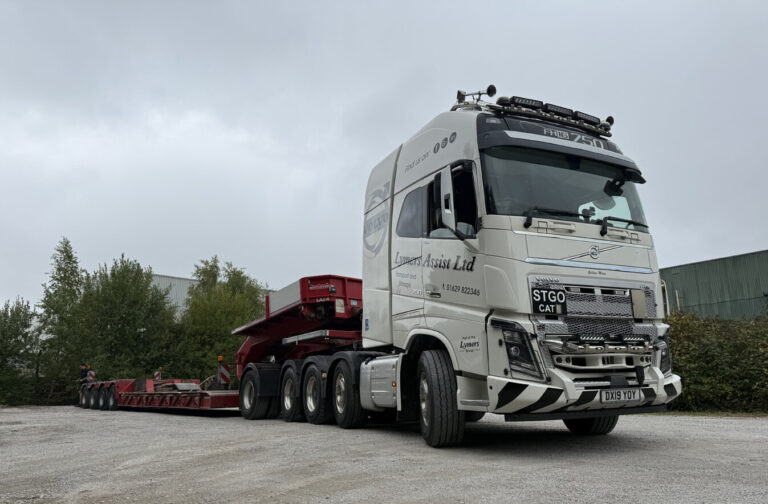
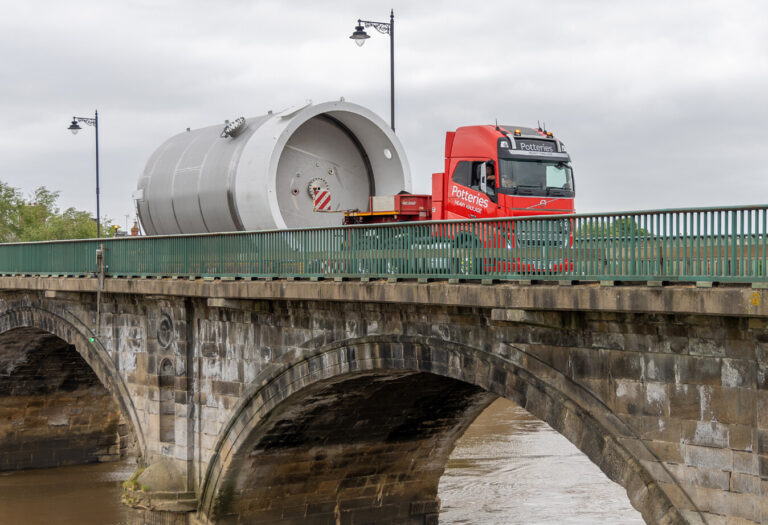
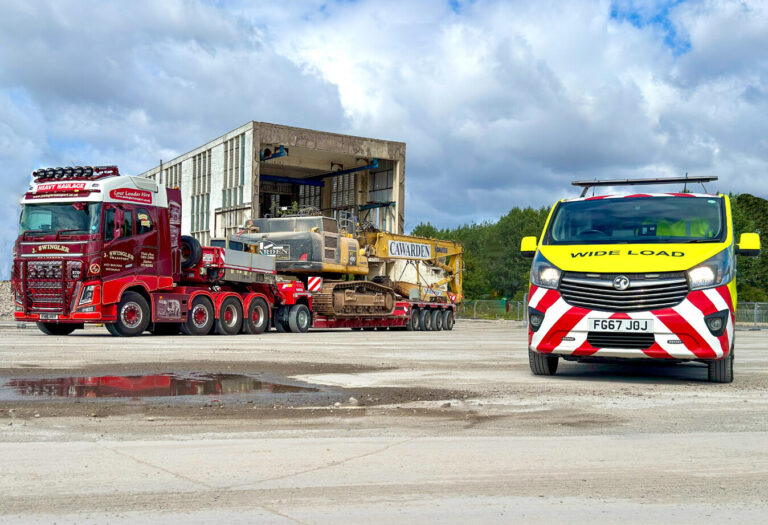
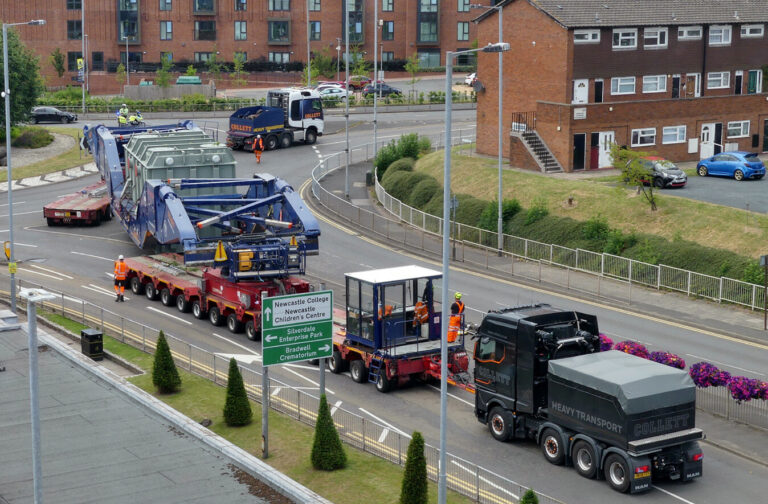
Seen something special on the road? Then upload a picture to the 'Capture of…
Read the featureBob Beech explores how King Group has broadened its offer, refined its trailer range…
Read the featureWe find out how Osprey delivered the UK’s first known electric SPMT move with…
Read the featurePeter McKenna examines how the collapse of West Midlands police’s mobile-crane prosecutions has sharpened…
Read the feature


Three specialist titles. One essential weekly read.