News SpotlightHeavyTorque 41Pages 16–17
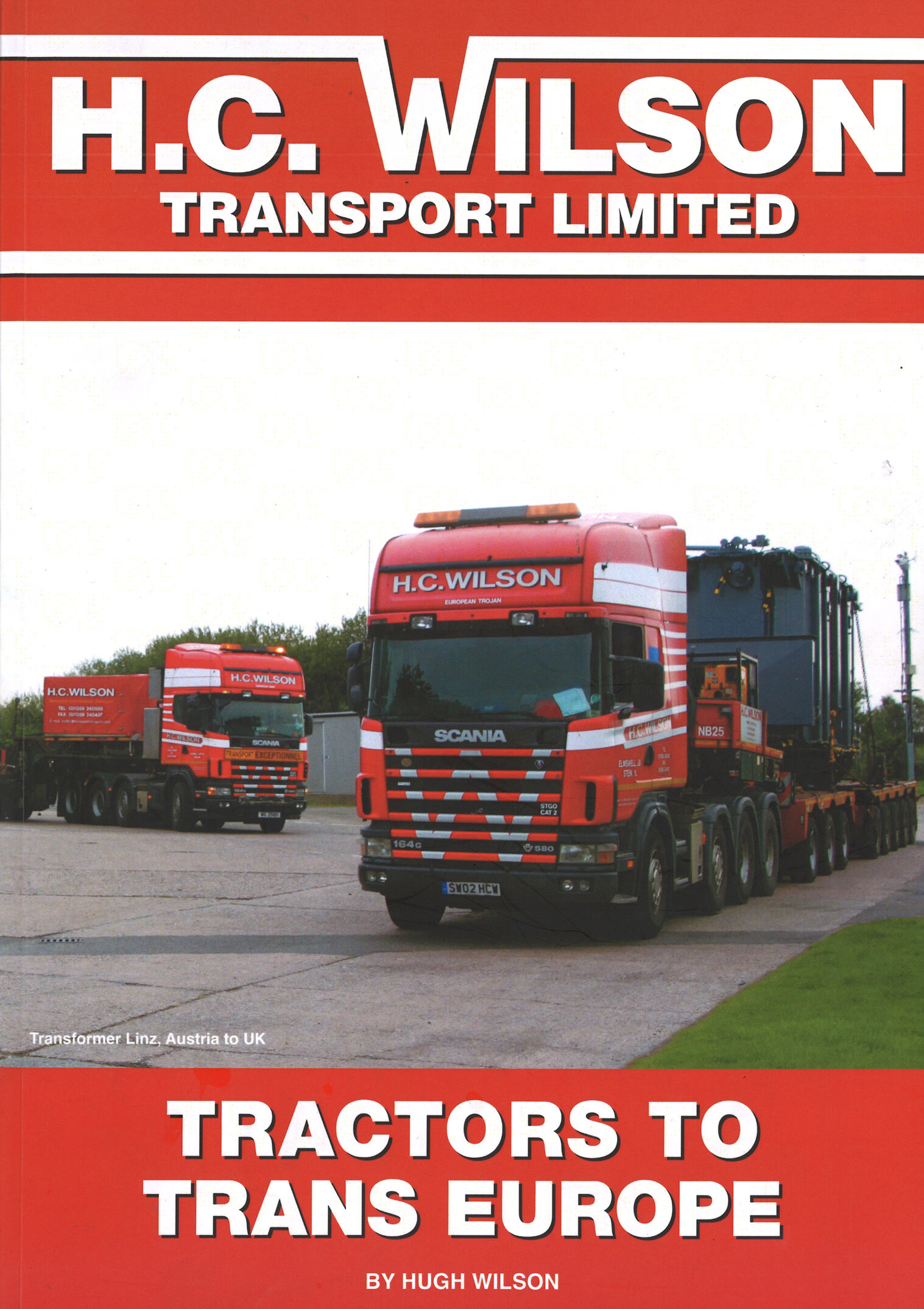
TRACTORS TOTRANS EUROPE
HC Wilson Transport founder Hugh Wilson recounts the first four decades or so of the company's history in a book every heavy haulage fan will cherish
HeavyTorque 41Pages 16–17
Tractors to Trans Europe, by Hugh Wilson, covers the first 42 years of Elmswell, Suffolk-based heavy haulage contractor HC Wilson Transport.
Hugh started the operation with the right work ethic but little business knowledge, and was soon joined by his wife Marion who kept the books alongside raising a family of five.
The business began as an agricultural contractor and straw merchant, but quickly developed into agricultural road haulage, witnessing the growth of combine harvesters from 5 tons and 9ft 6in across the tyres to 14 tons and 12ft across the tyres. Surviving some banking troubles around 10 years in, HC Wilson Transport branched into larger agricultural loads that required special trailers with outriggers and wheel wells. Before long, Hugh's customers asked him to branch into the transport of combines and machinery to and from mainland Europe, too.
Hugh did just that, developing contacts in France, Holland and Germany. Of course, low trailers were required to pass safely under the bridges in Holland, with its legal height limit of 4 metres, based on a typical bridge height of 4.2 metres, but Hugh found Dutch trailer manufacturers were more than happy to help.
One vehicle of particular note in the HC Wilson fleet at this time was a Terberg 6x2 rigid chassis, purchased in Holland, onto which a platform with a deck height of 75cm was built by Graham Chaplin, a local welder, with wheel wells in it to lower the height of loaded combine harvesters. To go with this, Jumbo Groenewegen was happy to build a low 3-axle trailer, again with wheel wells. For the first time, a drawbar outfit could carry most combine bodies, two at a time, within a height of 4.2 metres, something that featured widely in the technical press at the time.
Of course, one of the issues back then was that of axle loadings. Hugh joined the Heavy Transport Association in the late 1980s, and found many of the more established members still lamenting the recent reduction in abnormal axle load limits from 22 tons to 16.5 tons. In Germany, meanwhile, 10 tons was the maximum allowable. This meant many more axles were needed under heavy loads. Later, 12 tonnes were allowable for certain axle designs. Hugh therefore purchased enough axles to meet the German standard, which meant the bridge authorities in the UK looked more favourably on his special movements.
During the 1980s, fierce competition in agricultural machinery haulage forced the company to shift into industrial loads. This meant buying trailers (a better description would be versatile hydraulic work platforms) with up to eight axles, mostly with power steering.
Sign in to keep reading, free
Sign in for 3 free features a week, mixed across all three magazines. Already a subscriber, or want this issue on its own? Those work too.
Also in issue 41
The whole issue Operator
Blackwood Plant Hire
 Operator
ProDrive
 Vehicle Modification
Rydam Universal
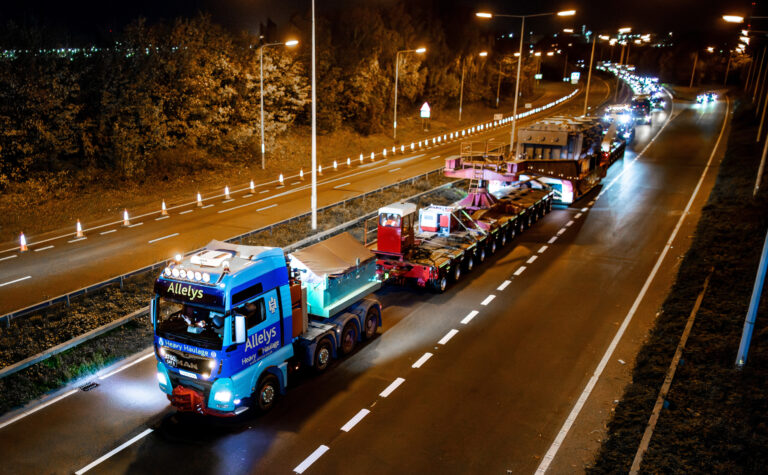 Operator
Allelys Group
 Manufacturer
Renault C520 6×4
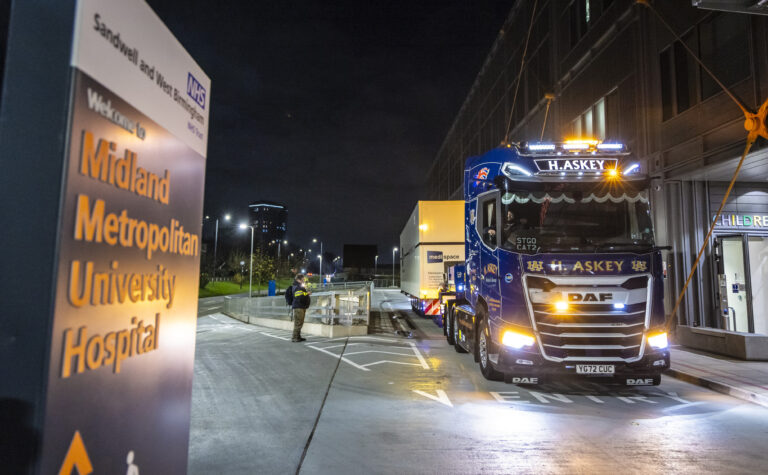 Operator
H Askey Transport
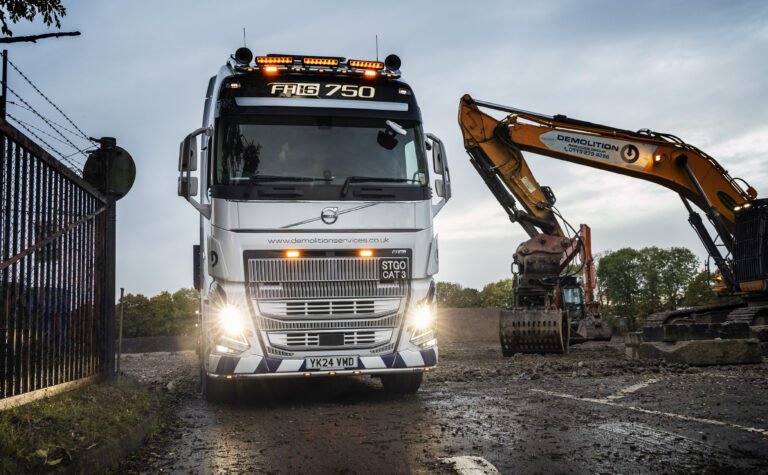 Operator
Demolition Services Ltd
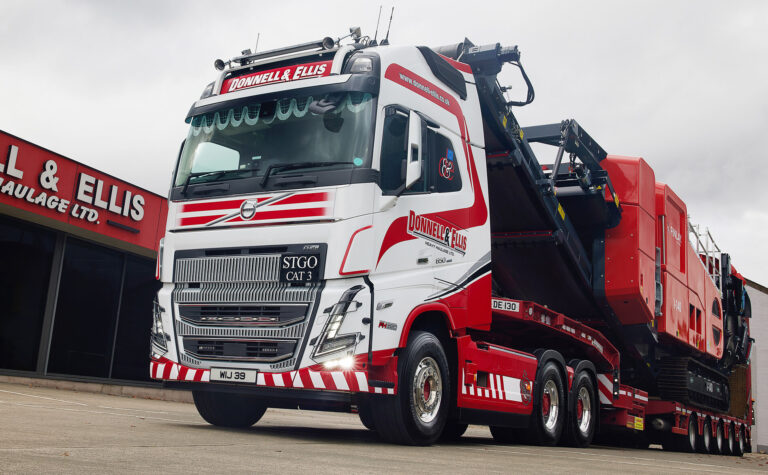 News Spotlight
Volvo | Donnell & Ellis
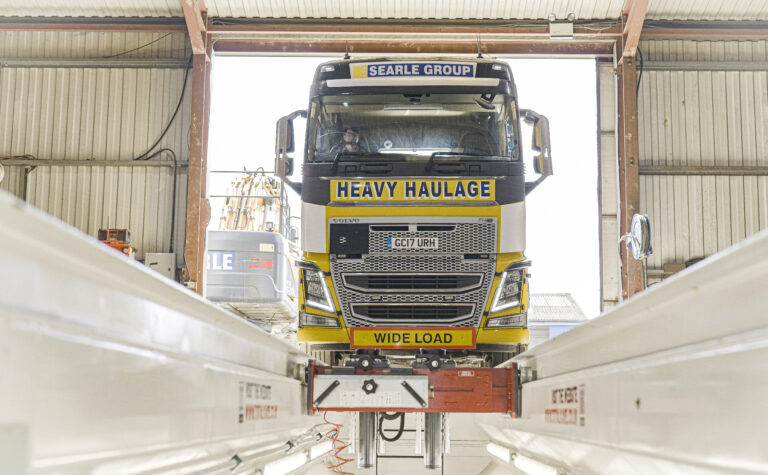 News Spotlight
Totalkare | Les Searle Group
 ALLMI Corner
 European Ramblings
Patrick Versteeg
 Competition
Capture of the Quarter